
Biography – Richard Chaney

Richard Chaney (b. 1949) is a playwright, director, actor and retired medical social worker. He was born in Indiana where he met his partner David Swisher (1947-2023) in 1971. They moved to New Orleans’ French Quarter in 1973 where they were involved in theater, LGBT activism and early work in HIV services. They subsequently lived in San Francisco (1986-90), Washington DC (1990-96), Seattle (1996-2003), Tucson (2003-13) and, finally, Athens, Georgia where Swisher died after a long illness. Swisher and Chaney were together for over 51 years.
This is also written in memory of Alan Bourgeois, Perry Brown Jr., Ron Cotten, Dennis Daray, Tim Dove, Jessie Dykes, Tony Eccles, Suzanne Joslyn Fosberg, Taylor Gibson, Julio Jaimes, Wiley Jenkins, Helen Jolly, Marti Kanin, Charles Kerbs, Roberta Knopfer, Sara Lang, Chuck Nearn, Robert Page, Gary Plum, Gay Reeves, Robert Rohe, Bill Rushton, Jerry Scavo, Michael Stark, Jerry Stone, Willie Tinkin, Kenny Walker & Ron “Rondo” Williams.
9/1/24, Athens, Georgia
Photos
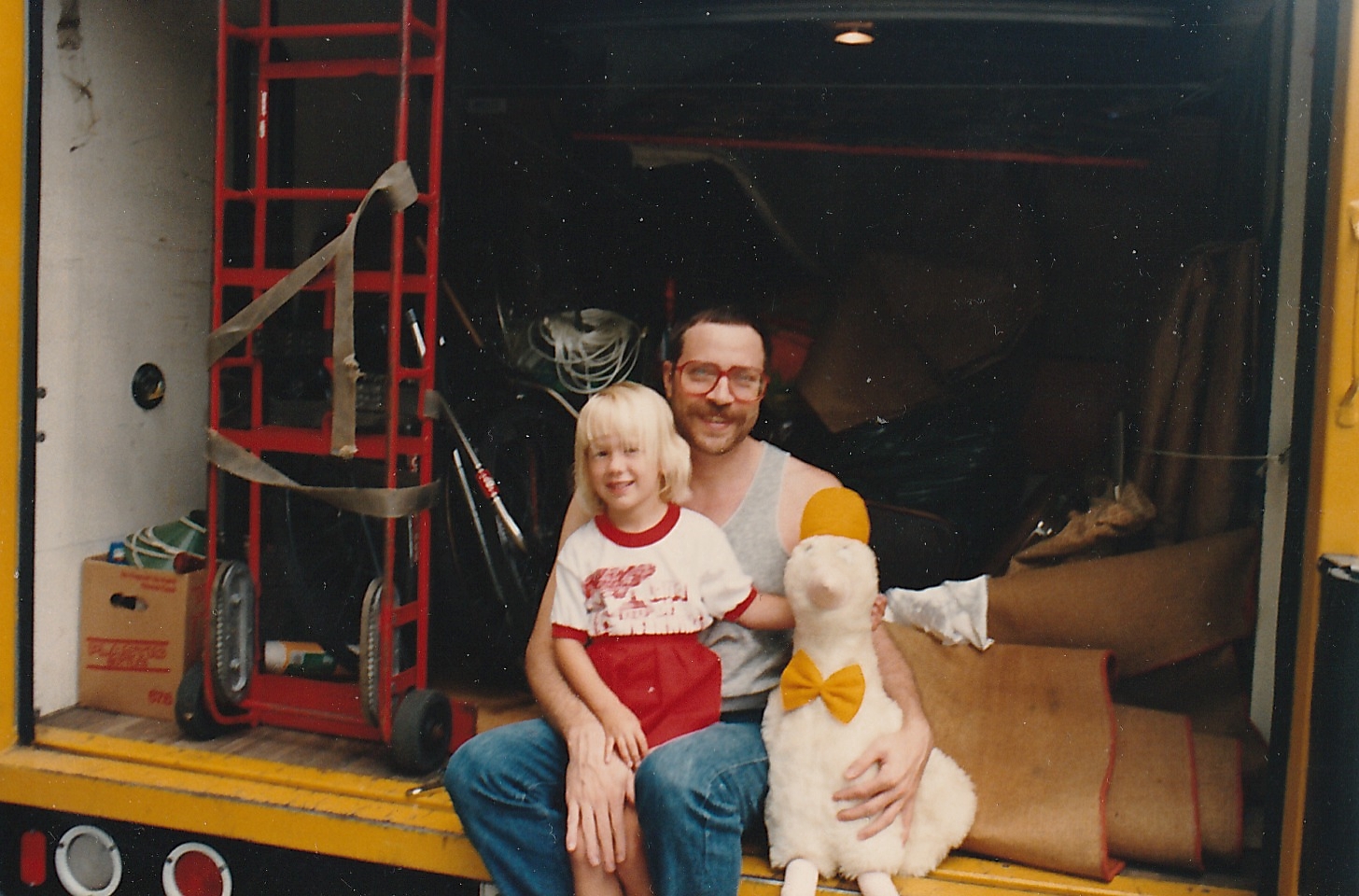

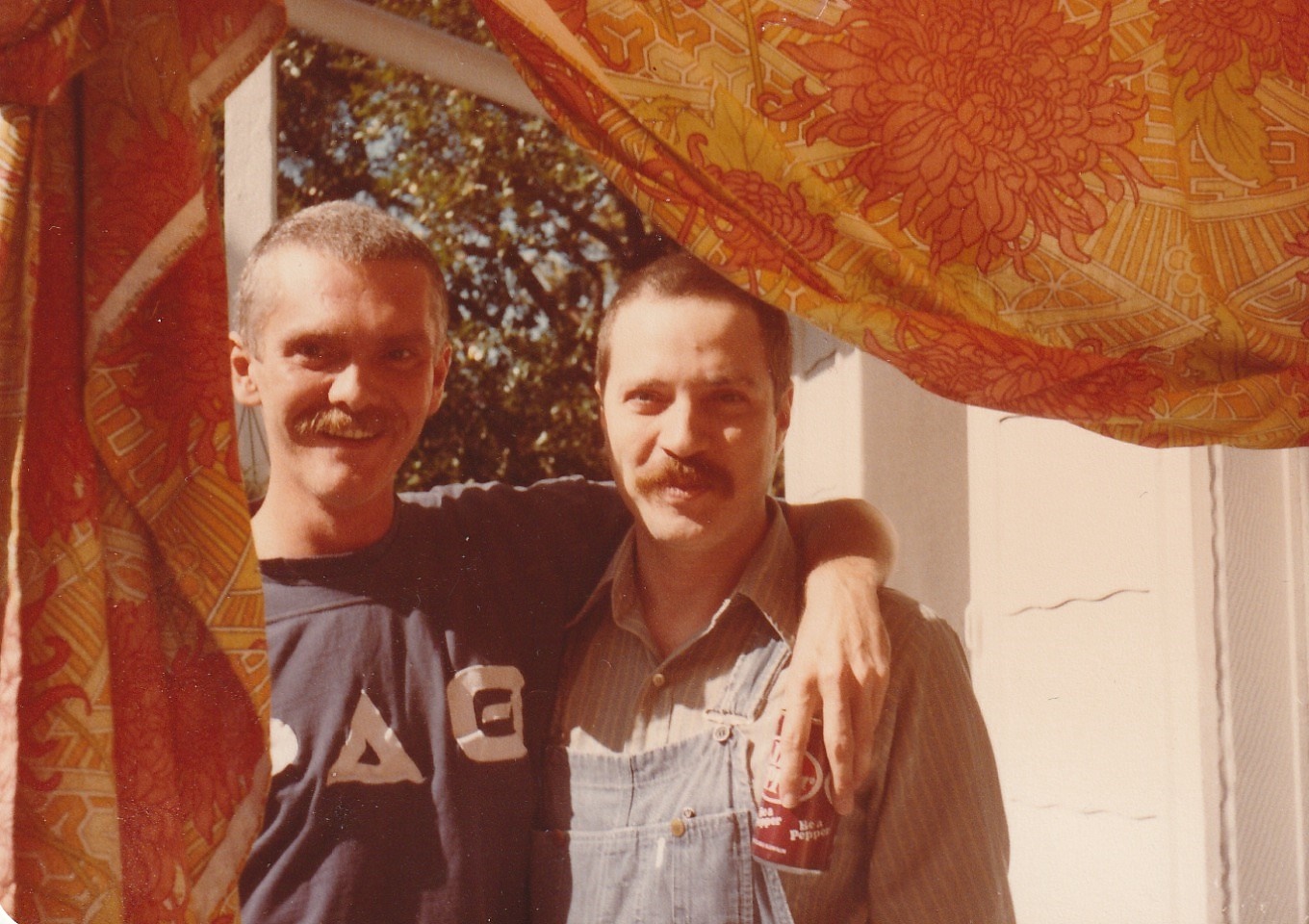
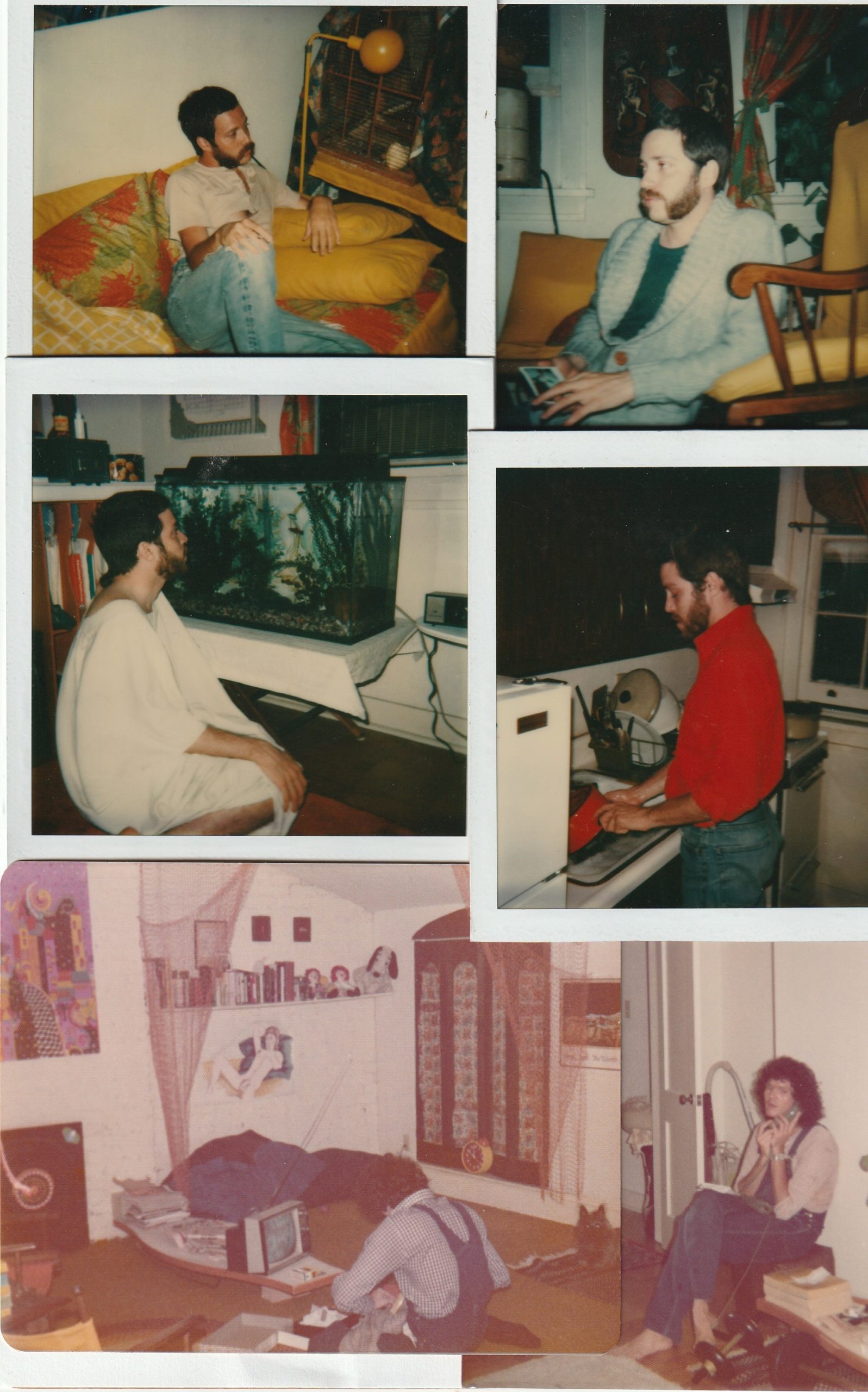
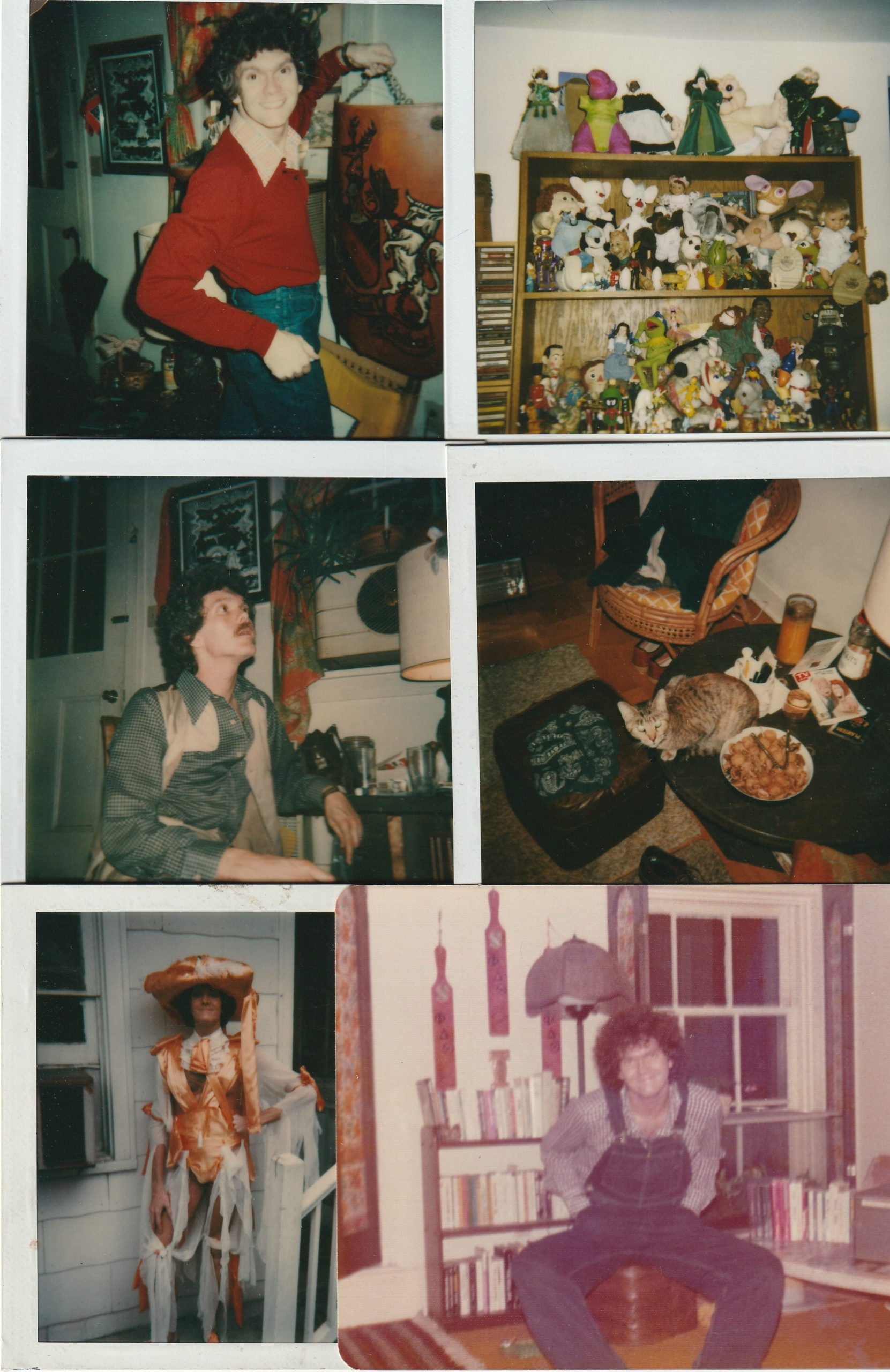
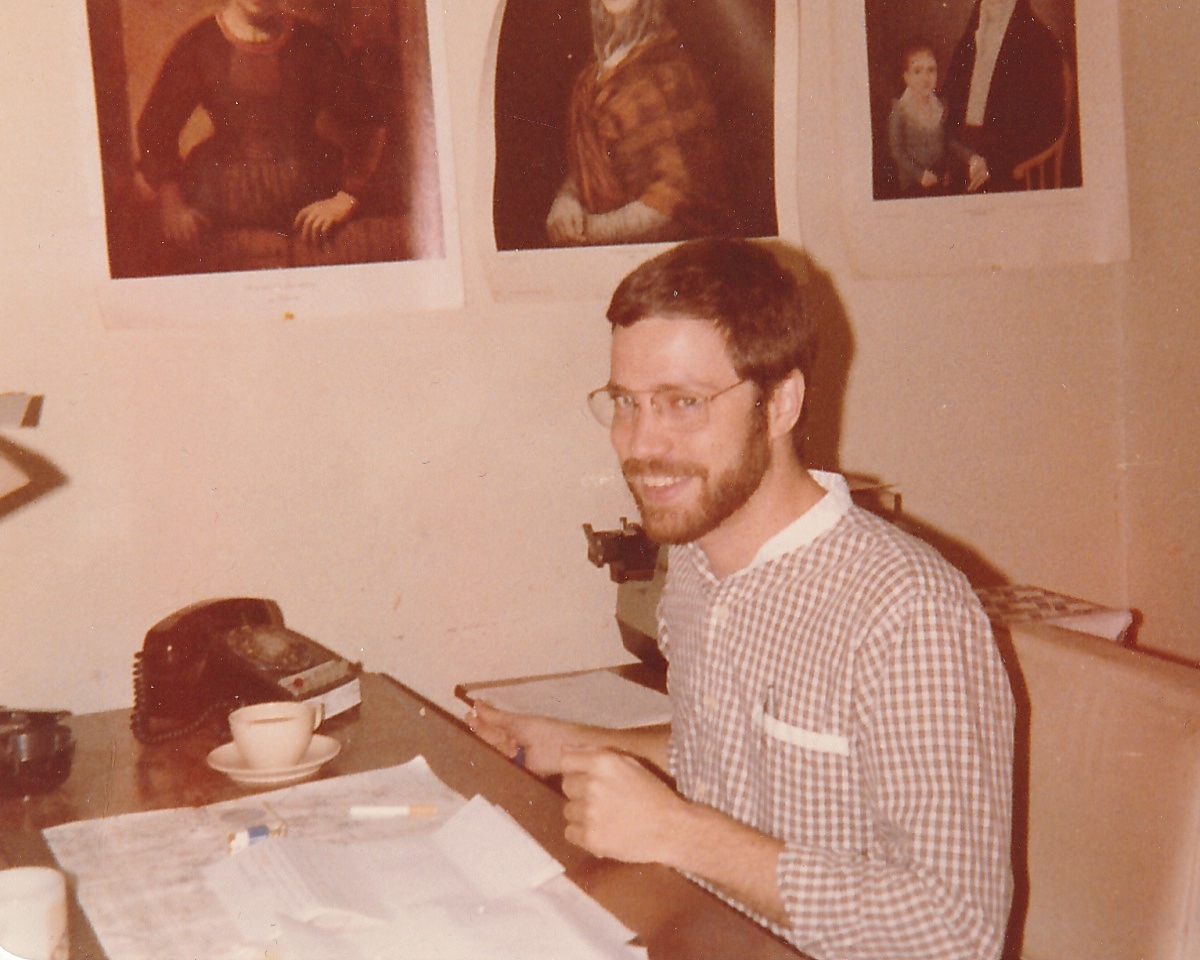
MY NEW ORLEANS AUTOBIOGRAPHY (1973-86) by RICHARD CHANEY
Originally written September 1999 – February 2000 (edited)
#1
This is the story of two queer men from Indiana who moved to New Orleans in 1973. I was 24 and teaching high school. David Swisher, my partner of 1 1/2 years, was 26 and selling records at a department store. Nancy Troxel, working at a newspaper in Crawfordsville, had introduced us in December 1971.
In 1973, Nancy Troxel was the most independent woman I knew. Focused and ambitious, her attitude as editor of Indiana State University’s The Indiana Statesman carried forward into her post-college life. Troxel was Aryan blonde, blue-eyed and Rubenesque in proportions. She had sex when SHE pleased. During a grass-inspired rap one afternoon, I found out that we’d both been involved briefly with same Black, married athlete in college. Dissatisfied with her newspaper job as much as I was with teaching, Troxel was ready to pursue the “other half” of her talents: playing the cello. She’d graduated from college with a schizophrenic double major in journalism and music.
I don’t know who suggested New Orleans. I had been there as a child in 1956 with my parents. Troxel had never been, so probably it was David who’d gone alone to Mardi Gras in 1972 and stayed with Pam Bryant and her Lesbian lover Jessie Dykes. On a subsequent trip back “home” to Lafayette, Indiana, Pam had encouraged the three of us to move. For Troxel, the deciding factor was the discovery that her former cello teacher, Marti Kanin, was playing in the New Orleans symphony. David simply wanted to escape his family. My single link to the Crescent City was Todd Lindley who, along with his wife Dana, had moved there in 1971 to pursue a Master’s Degree in Drama at the University of New Orleans. Todd was my ex-fraternity brother.
In charge of my destiny… Despite my mother’s excited telephone admonishments-(“Why are you moving? You won’t find a job! What are you doing? This is a mistake!”)-going to New Orleans seemed without great risk, only a great adventure. This is how one feels at 24, without much baggage, relatively rootless, no debts, no children, lack of money no great barrier… Just do it. Take the leap!
Setting up housekeeping together as trio seemed quite natural in 1973. Our lives were more communal. We were less embarrassed by each other’s foibles. Boundaries were mesh. Hadn’t I made out with my college girlfriend Ann in the same bed next to our friends Ken & Susan? Hadn’t I often shared the spit-end of circling joints? Hadn’t I skinny dipped with Troxel and David and our friend Bow at Clifty Falls State Park? “Let’s go,” hummed the voice in my head. “Let’s go!”
#2
When I left teaching at Benton Central High School, I gave librarian Ora McGuire a diary embossed with the word “catalyst”, because that was how I viewed her. As his graduation gift, she gave me her son Tom to take with me to visit New Orleans, a sexual temptation which I resisted.
David and Troxel left in their packed cars-David’s rusted Pontiac station wagon, Troxel’s big-finned Dodge-a week ahead of my exit. My possessions, crowded into my Pinto, left two cockpit seats for Tom and me and a completely obstructed view through the back window.
Driving south put Indiana and the past and much of my previously assumed future behind me.
Tom and I arrived tired and gritty at 827 Burgundy Street 18 hours later. David and Troxel had found a third-floor walk-up apartment in the French Quarter. Like all the buildings in the Vieux Carré, this one stood flank with the other houses and was separated from the narrow street by a cracked strip of sidewalk. Chunks of missing stucco exposed the old bricks beneath. A strip of dirty carpeting on the stairs (dark yellow? green?) descended from the top and matched that on the floor of our #3 apartment. Our living room spanned the width of the building. A sloped ceiling ended in shuttered windows which faced front. A bedroom at the rear looked down on a bare courtyard and offered a corner view of the back of Tennessee Williams’ house on Dumaine. A tiny kitchen and bathroom completed the layout. Troxel took the bedroom and David and I slept on a rolled-out sleeping bag in the living room.
After a week’s visit, Tom McGuire went back to Indiana and to his enrollment at Indiana University in Bloomington. The next time we saw him, freshly returned from hiking in Central America with his companion Marie, he was a beard-stubbled adult. Tom’s emails are filled with word plays and intellectual hijinks. His 18-year-old boyishness still clings to him today. Now married, he lives in Oakland and works at the University of California at Berkeley. His ardent articles on such diverse topics as jai alai and vegetarianism have appeared in alternative journals.
Visiting San Francisco in 1997, we had a dinner at a Vegan-friendly restaurant. When Tom arrived, he kissed me on the lips! On, the unfathomable mysteries of heterosexual man-to-man affection!
#3
New Orleans…The Crescent City…The City That Care Forgot…
New Orleans will always be home to me. I haven’t returned since we left in 1986, maybe because I haven’t been ready to go home again-or because I’m afraid to witness the city’s decline which friends describe. I know New Orleans as a magical city, decadent, beautiful, constantly surprising.
With its fixation on eating and drinking and sex, New Orleans promotes over-indulgence. It’s sultry and sensuous. Sometimes in the afternoons the fullness of the air reaches such a tension that it breaks loose with a burst of hot rain, further steaming the sidewalks and hidden courtyards of the Quarter. The city reeks of smells both appealing and off-putting, a wet decay of food and river.
New Orleans IS the South, make no mistake about that-with all of the South’s faded gentility, often misplaced adoration of the past, good-ole-boy politics and white-glove and red-necked racism-but it is also the most sophisticated of Southern cities with a tradition of tolerance and a unique Spanish-French heritage. It’s the old city, the French Quarter(s), the Vieux Carré which best typifies this, its lace-balconied buildings inhabited by transients and outcasts and “old-family” rebels and writers and artists.
The Quarter (80-square-blocks) is bound by North Rampart Street, tree-shaded Esplanade Avenue, downtown’s Canal Street and the sluggish Mississippi River, meandering behind levees. In addition to the adjacent Faubourg Marigny and Treme, the city’s neighborhoods include Bywater, St. John’s Bayou, Gentilly, the Garden District, Uptown, Mid-City, Old Metairie, Carrollton, the Irish Channel and the Ninth Ward (where accents carry a Brooklyn twist). Algiers, ferry-accessible across the River, is also part of Orleans Parish. The Lakefront District butts up against Lake Pontchartrain. Cuban and Central American immigrants live along Magazine Street, which takes root in the Irish Channel and ends at the Audubon Park & Zoo. City Park is home to the New Orleans Museum of Art and the famous dueling oaks.
Following a work-related trip to New Orleans in 1994 and frustrated because of the delay in the promised shipment of the huge, ceiling-hanging, painted wooden fish he’d bought, our boyfriend Ron called a month later to inquire about its delivery. “Ya know, we just haven’t gotten the stepladder out to take it down yet,” replied the shop owner. David and I smiled. In the South, tomorrow is ALWAYS another day.
#4
David left early each day. He was working as a psychiatric tech at River Oaks Hospital for adolescents and young adults. Troxel snoozed in the bedroom, awaiting her alarm to arouse her for her next Kelly Girl assignment, so when the burglar pushed open the door of our apartment in July 1973, I was the only one who saw him through half-sleepy eyes and began yelling. He ran down the stairs and through the front door of the building.
A neighbor in Seattle cautioned me recently about parking my car on the street at night. “Cars have been vandalized here,” she warned. My (un)reasonable response: “I used to live in New Orleans and Washington DC.” Car break-ins were not unusual in New Orleans, especially in the French Quarter where parking was nearly non-existent and often meant finding a space several blocks from home. Residents left their cars unlocked to avoid broken windows. No one wanted to steal my Pinto.
Except for assaults and murders and rapes in the housing projects, most of the crime in New Orleans was non-violent, victimizing tourists via purse snatchings and pick-pocketing. Several years later, returning from a party, I was mugged by two men, but I judged this as my own stupidity: walking down a deserted street, bent over in an asthma attack. Could I have signaled “Victim! Victim!” any louder? Furious (“This is dumb! I’ve only got five dollars.”), I yelled after the fleeing perpetrators: “Leave me my wallet!” The taller of them tossed it on the sidewalk.
Cities are dangerous, dirty places which challenge our sensibilities and survival skills. When my family (no longer in California, now living in Poplar Bluff, Missouri) visited me in 1973, my parents were appalled. Smoking a cigarette at the corner, my father was propositioned by a male hustler. My siblings (ages 10, 13 and 16) eyed my new surroundings with fright and curiosity.
So what’s the trade-off? If city living requires vigilance and adaptation to noise and traffic and crime and inconvenience, then what are the attractions? What exactly are the advantages? The easy availability and stimulating exposure to culture and new experiences and opportunities? …Well…YES.
#5
I wasn’t eligible for a teaching job in the Orleans Parish school system because I didn’t meet the local requirements (Louisiana history and college math). Luckily, my summer pay from teaching in Indiana allowed me time to contemplate my uncertain future.
Much to Troxel’s chagrin, I bought a dog, a cairn terrier which I named Baldwin after the author of Giovanni’s Room. Baldwin was a feisty Toto-clone. He chewed his way through Troxel’s shoes and several of David’s record albums. When our second floor neighbors (Lenny & Patty Thomas, Ghana Peace Corps volunteer alums, a physician and a parasitologist) came to dinner, Baldwin immediately jumped into Patty’s lap and pissed. Baldwin died a year later after eating a dead fish he found on the Gulf Coast and was replaced by a grey, short-hair stray, Minnie-Cat, so named by our friend Jerry Scavo who insisted ALL cats were named Minnie. However, Minnie-Cat’s life was short as well and we remained animal free until the San Francisco guinea pig invasion of 1988.
Braving the humidity-drenching heat, Troxel and David and I ventured out to explore the city, enjoying beignets and café-au-lait at Cafe Dumonde, fresh produce from Decatur Street’s open-air French Market and night-time, go-cup tourist-watching along Bourbon Street. Troxel and I split a dozen raw oysters, lubricating them with horseradish and washing them down with Jax beer. Our favorite eateries on our street were Buster Holmes’, where you could get a plate of red beans & rice and sausage and buttered French bread for 60 cents, and the Burgundy House, where the trans server brought us jambalaya and (for David) vegetable-plate specials.
Troxel dated Ellis Pregeant, a Xavier University professor, made friends with M. L. and “Rat” Atkinson, a Times-Picayune copy editor and an Audubon zookeeper, and began cello lessons with Marti Kanin. David and Troxel had stayed with Marti while apartment hunting. Marti was divorced and was dating Bob Rohe who played first-chair bass in the Symphony. Bob was widowed and spent every summer building his house near Port Clyde, Maine. Marti spent her summers playing for the Santa Fe Opera. Bob would later marry local television personality Terry Flettrich and retire to his off-coast island. He gave David a silver-inlaid pipe to use for his marijuana smoking.
On weekends Troxel closed her bedroom door and played her cello. The combination of music and grass and torpor-inducing heat sometimes lulled me to sleep.
#6
I retched into the toilet, spewing forth sprays of Bloody Mary debris and finally fell asleep embracing the porcelain base. David tucked a blanket around my shoulders. Although I’ve come close since then, this drunken upchuck was my last post-adolescent hurrah.
David and I had spent mid-day at the French Quarter apartment of two men who’d invited us for brunch and, unbeknownst to David and me, for lagniappe (New Orleans translation: a little something extra!). Although we nimbly avoided being part of the menu, I drank myself into foolhardy oblivion. We’d met this couple the previous week at a pool party in Gretna at the home of Pam Bryant and Jessie Dykes.
Pam was a high school classmate of Troxel’s and David’s, a stereotype “femme”, blonde hair and fair and given to tight jeans and pastels, Jessie the older “butch”. Role-playing was alive and well in New Orleans in the 1970s. Two toy poodles ran, yipping throughout Pam & Jessie’s house. Party-goers included several members of the krewe (New Orleans translation: club) of Amon Ra, a carnival organization, and Jessie’s neighbors and ex-lovers and their new girlfriends who lived on the same street in an improvised Lesbian row. Jessie was social worker supervisor of Admissions and Addictive Services at New Orleans Mental Health Center.
Pam and Jessie and David took me to my first gay bar. Oddly, I don’t remember which one. I would never be much of a bar-goer. The atmosphere (noisy chatter, jukebox music, smoke-filled) was anti-climactic, but gay-expanding. In an early eye-opening discovery I’d found that Sidney’s Newsstand on Decatur Street sold all the cock magazines (Blueboy, Torso, Honcho, Mandate, Playgirl, Viva) and without brown paper wrappers.
In addition to Lawrence Durrell and Kurt Vonnegut and The Diaries of Anais Nin and the feminist works of Kate Millett, Doris Lessing and Germaine Greer, I greedily devoured anything gay-themed: The Front Runner, John Rechy’s City of Night, Christopher Isherwood’s novels, Gordon Merrick’s romances, The City and the Pillar by Gore Vidal, Djuna Barnes’ Nightwood, The Well of Loneliness, The Lord Is My Shepherd and He Knows That I’m Gay by Rev. Troy Perry, The Gay Mystique by Peter Fisher, biographies (Noel Coward, Tennessee Williams, Alice B. Toklas & Gertrude Stein, Oscar Wilde, Paul Bowles, Carson McCullers, Vita Sackville-West & Nigel Nicolson, Dave Kopay), E. M. Forster’s long-suppressed Maurice and anything related to the Bloomsbury Group.
#7
In August 1973, I answered an ad in the Vieux Carre Courier and was hired by Charles Dolce Advertising as an assistant to Perry Brown, Jr.. Perry was a fifty-ish Blanche DuBois. He lived on Governor Nicholls in the French Quarter with a Great Dane and succession of young men about the same age as his son-who lived on St. Charles Avenue with Perry’s ex-wife. Dual lives were a New Orleans tradition: family, Uptown, and an “unspoken” life of homosexual liaisons and/or quadroon mistresses in the Quarter.
Perry was a flustered, faded belle, kept at the advertising agency because of his long-standing and profitable relationship with Hollywood movie studios. As a child, he’d been the original Buster Brown of Buster Brown Shoes. In addition to arranging publicity stunts, coordinating advertising and squiring visiting semi-celebrities around town, Perry’s connections facilitated plugs in the local society columns, the most influential at the Times-Picayune, written by his friend Tommy Griffin.
I served as a glorified gofer, sometimes writing copy, more often acting as a buffer. Perry arrived at the office at 10 a.m., swooped in with his leather shoulder bag, put his feet up on his littered desk and started making telephone calls: “That’s TERRIBLE!” “She DIDN’T!” “That BITCH!” Stocker Fontilieu, managing director at Le Petit Theatre (the oldest existing in the U.S.), reported in daily.
Two months later when Perry moved to Media Consultants, Inc. on South Claiborne, I moved with him. Like his clients, I belonged to HIM, not Charles Dolce Advertising.
Media Consultants was managed by a defrocked, gay Jesuit (John Thomann) and backed by local mafia money. An original Peter Max graced the reception room. A protege of Perry’s, Bob Goodwin, and a second account executive, Lamar Berry, completed the staff. Bob and Lamar were recent graduates of Loyola University and Lamar boasted “old family” connections, as well. Lamar’s brother Jason Berry had a flair for investigative writing and would be the first to publish a book about the slaying of civil rights leader Medgar Evers.
#8
An avid New Orleanian, Candy Davey lived in the French Quarter on St. Philip Street in her first single-gal apartment. Ann Potter, a legal secretary who’d been dumped by her medical school boyfriend, lived across the courtyard. Candy was over six feet tall, painfully thin, with a receding chin and prominent eyes. She cackled. Ann was blonde and attractive and chain smoked and distrusted the world.
David met Candy when he began working in display at D. H. Holmes (Maison Blanche’s main competitor in New Orleans’ department store trade and famous for its “under the clock” rendezvous in the novel The Confederacy of Dunces). Others working in the department (John Chapman, Jimmy Knight, Charles Kerbs, Lee Bates, Vic Rodi) would play minor roles in our lives over the next few years, but Gary Plum and Jerry Scavo (the Minnie-Cat namer) and his lover Kenny Walker became our friends. Gary was a cock-obsessed, corn-fed Iowa transplant. Jerry and Kenny, ten years our senior, were Louisiana natives, short and muscled, a gay male couple not interested in fucking us. We went to movies and restaurants.
Both Candy and Jerry were ego-eccentrics. David and I supported Candy through the loss of her virginity, surgery to lengthen her jaw and career crises. Jerry smoked cigars, postured and sent food back 50% of the time in restaurants. He was easily offended by disagreements. Candy and Jerry sometimes clashed.
Candy hosted our first hurricane party. Shuttered up in her apartment, the window panes masking taped, plenty of candles and food and batteries, the bathtub run full of water and radio bulletins droning in the background, the rain pounded outside in a green-yellow sky.
Jerry introduced us to St. Joseph’s Day, the annual Italian celebration, marked by public viewings of elaborate food altars in private homes, the locations of which were announced in the Times-Picayune. Like most events in New Orleans, St. Joseph’s Day prompted a street parade which rivaled the city’s St. Patrick’s Day Parade. Both were filled with drunken, costumed men intent on kissing as many onlooking women as possible. The men often hesitated when approaching Candy, puzzled by her gender, but then shrugged and lip-smacked her anyway.
Next to Candy and Jerry our friends Ann Potter and Gary Plum were examples of normalcy-no matter that Ann began screaming one night in front of the Royal Street A & P because we couldn’t find a restaurant without a 45 minute waiting time, nor that Gary called David one morning to rescue him from his abandonment by a trick who’d left him handcuffed to the bed with a pool ball stuck up his ass.
Our friends were full of surprises.
#9
Thursday through Sunday evenings I stood on the second tier of the scaffolding, held hands with those on either side of me and waited until the lights went up. Mid-song, an expanse of parachute-silk, which covered the eight of us (drawn by lot each night), was gradually lifted to reveal our nakedness.
Gallery Circle Theatre’s 1973 revival of Hair was a sold-out success. I’d auditioned to replace my co-worker Bob Goodwin when the run of the play was extended. I had no speaking part as a Tribe Member. My singing was abysmal, but when director Jack Morrison brought me backstage and asked me to take off my clothes so he could look at my body, I got cast. I was, after all, slim-figured, fine-assed and long-haired. I was the only person who stripped every night, assuming the role of Jesus during another song, lifted and thrust against a scrim and then carried about the stage on the shoulders of four other actors.
Two alumni of the production achieved celebrity status. Andrea Roane became a popular producer at PBS in San Francisco and Washington DC and Vernel Bagneris, a light-skinned Black Creole with pale green eyes, went to New York City with his cabaret musical One Mo’ Time and appeared in Pennies from Heaven with Steve Martin. Twenty years later, over coffee chat with Anne Delphenich in Washington DC I found that she’d had a brief fling with Vernel’s lover Orange, a tri-coastal, bisexual, red-haired musician. The world is a small place.
I liked being nude. I enjoyed the freedom and sensuality of it. A drawing Candy Davey did of me in 1976 for her life-study class still hangs on my bedroom wall.
Hair was my first theater involvement since high school and would be my last until 1981. The only one in-between would be a 1975 staged reading with David of Jean Genet’s The Maids for Lyla Hay Owens’ & Charles Kerbs’ Actors Workshop at Apple Street Playhouse.
#10
To live in New Orleans, especially the French Quarter, is to survive Mardi Gras. Mardi Gras, literally translated as “Fat Tuesday” (the penultimate day of celebration and debauchery before Ash Wednesday), officially closes the carnival season-which begins each year with January’s Twelfth Night ball. Mardi Gras is an official holiday in New Orleans.
Carnival krewes absorb the city’s social attention and financial resources and include Rex (“old family” members), Zulu (Black members), Iris (women only) and Bacchus (noveau riche, including Jews) and Amon Ra & Petronius (gay & Lesbian). The immediate suburbs, the West Bank & Metairie, also boast krewes. All the krewes host black-tie carnival balls. Most host street parades with elaborate floats, marching bands and kings & queens. The parades (evenings and weekend afternoons) begin three weeks before Mardi Gras. Masked krewe members riding the floats toss carnival “throws”, primarily beads and doubloons with the krewe’s insignia, to screaming street crowds (“Throw me something, mister!”). Zulu distributes the most prized offerings: coconuts painted gold. The popular city routes are St. Charles Avenue, Carrollton, Canal Street and North Rampart. Each year someone in the shoving crowd is pushed under the crushing wheels of a float.
Thousands of neighborhood parties supplement the carnival balls, including the traditional king cake parties. King cakes are braided sweet breads decorated with green, gold and purple sugar. Baked into each cake is a pink, plastic baby (originally a bean) which, when found by an unsuspecting guest, identifies who is to host the next party.
Most New Orleanians are carnival enthusiasts, adept at collecting throws and embracing the party hysteria without mishap. Our friends Candy Davey and Pam Bryant & Jessie Dykes and Jerry Scavo & Kenny Walker were no exceptions. Candy went to all the city parades and each year finagled a ticket to Petronius, the most esteemed of the gay balls. Eventually, she became a member of Iris. Candy was skilled at coaxing throws from the float riders, grabbing beads in mid-air and stomping on doubloons that hit the ground, even if it meant smashing the fingers of a ten-year-old.
All “true” New Orleanians costume on Mardi Gras day. Quarterites walk the streets, where much of the costuming is drag (Kenny Walker as a milkmaid), gender fuck (Jerry Scavo, bearded, in a corset and torn, black stockings), nearly nude (Gary Plum in a feathered mask and jockstrap and boots) or camp (Troxel as Wonder Woman). David and I paraded the streets for several years, scantily clad, in outfits David made to coordinate with Candy’s more expensive and elaborate attire. We often stopped and posed for pictures.
The wantonness of Mardi Gras was perfect for watching and being watched. The general dictate of “feel good, worry about the consequences tomorrow” encouraged the breaking down of restraints-(“Show us your tits!”)-as celebrants often binged themselves into sexual abandonment. David and I reached our peak early one Monday evening before Fat Tuesday when we coupled on our courtyard balcony in the twilight, eyes upon us. Promptly each year, as midnight signaled the beginning of Ash Wednesday, street cleaners descended upon the Quarter and washed away the overpowering stench of vomit and beer and urine and human juices: the decadent sweetness of life lived.
#11
Chicago has Cook County Hospital and San Francisco, San Francisco General. In New Orleans, “Big Charity” (Charity Hospital of Louisiana at New Orleans) looms over Tulane Avenue, a grey-stone monstrosity, the central tower soaring 14 floors above the street. I became part of that system in February 1974.
Media Consultants, Inc. was going under: poorly managed, no growth in clients, my boss Perry Brown arriving later each day and leaving early. When the secretary was let go, I assumed her chores as well as copywriting and media buying and writing checks. Although the free movie screenings had been fun and our involvement with the First Annual Miss International USA Pageant near farcical (judges being Marty Allen of Allen & Rossi, no-name actress Ahna Capri of Enter the Dragon and the current Marlboro Man), the hope of meeting such celebrities as Tamara Dobson (star of Cleopatra Jones) was no longer enough to keep me. Job security was too shaky.
In charge of my destiny… At the urging of veteran State employees Pam Bryant & Jessie Dykes, I called in sick one day, took the Typist-Clerk II exam for the State of Louisiana and was offered a job in Patient Billing at Big Charity the next month. I accepted, told Perry I was leaving (who was furious and stopped talking to me) and left one week later.
Patient Billing was on the third floor of a small building tucked under the shadow of the tower and next to the old TB sanatorium. My supervisor was Olga Falati who referred to her husband Joe as the “retired wop cop”. The staff divided itself into white wives of blue-collar workers and Black women of various ages and marital statuses-and me. The first Black woman hired in the department was nicknamed “Pinky” because she was light-skinned. Only a few years before my hire, the wards at Charity had been divided between “white” and “colored”. Working in Patient Billing was my first exposure to day-to-day racism and one of the most valuable experiences of my life.
The work was stress free. I punched a time clock and took my seat in a row of identical desks with two dozen other employees and began typing until 10:15 a.m. (when there was a 15 minute break) and then again at 12 noon (a half hour break for lunch) and then again at 3 p.m. (a second 15 minute break). No one worked during the breaks. We clocked out at 4:30 p.m. We typed billing information on pre-printed, quadruplicate, carboned forms. Mistakes meant correcting each copy.
…I knew my college education would come in handy some day.
#12
On Memorial Day weekend in 1974, in an amicable parting from Troxel, David & I moved to 1416 Bourbon Street #5. Troxel moved Uptown, continued her private cello lessons and her full-time work as a legal secretary for a downtown criminal lawyer.
Our new apartment building was on the last block of Bourbon, across Esplanade Avenue, officially in Faubourg Marigny rather than the Quarter, and about seven blocks from the tourist hubbub. Leon Impastato, a prominent architect, owned the building, but its exterior was bland and uninteresting. White siding covered the original brick. A side door facing the street and a narrow passageway between buildings led to our courtyard. Giant flying cockroaches (palmetto bugs?) sometimes gathered in the passageway at night and terrified out-of-town visitors.
A balcony ran the length of our second-storey slave quarter apartment which overlooked a small goldfish pond and a fountain and a raised brick planting border of wild greenery. The Gordons, an artist and her retired husband, lived below us. Sara Lang, in her seventies, lived in the front apartment and emerged daily through her courtyard door, ready to discuss the MacNeil-Lehrer Report or an article she’d read in The New York Times. Sara was from Indiana just like David and I, divorced and had worked for several years as a land surveyor.
Our apartment was bright and warm-and small: two rooms with a tiny bathroom (a shower only) and a slot of a kitchen. Five windows and two windowed doors let in the sun. “It’s your eyrie,” said my friend Gay Reeves when she first visited in 1978, “an eagle’s nest.” A banana tree nudged up against the far end of our balcony. Sometimes at night, we could hear rats scurrying up branches to eat the fruit.
David and I were nearly furniture-less: our fold-out sleeping bag, a futon couch (a new purchase), two director’s chairs, a rocking chair, board & brick bookcases, a television, a stereo, some makeshift endtables, a chifferobe (from a Magazine Street junk shop) and a scattering of cheap lamps. Jerry Scavo loaned us a marble-top antique chest. The apartment’s window-unit air conditioners hummed.
Our rent was $125/month. When we left, 12 years later, our rent was $200/month. I loved our apartment. It always felt “good” to me and was usually filled with happiness and excitement. I was glad to come home.
#13
By the end of 1974, David and I had comfortably settled into our life. Our Bourbon Street apartment was the first home we had established together as a twosome. We went to movies and restaurants (Tortilla Flats, Port of Call, La Marquise, The Napoleon House). Visits with our friends in the Quarter (Jerry Scavo & Kenny Walker, Candy Davey, Ann Potter, Gary Plum) were often spontaneous. We took Troxel’s former cello teacher, Marti Kanin, to a documentary film about gay porn at the Toulouse Theatre and, in November, began what would become an annual tradition: hosting a Thanksgiving open house.
Each week day, I caught the mini-bus which crossed the Quarter, got out at Canal Street and walked the eight blocks to Charity Hospital. I was 25 and not particularly ambitious about my career. Having established a year’s residence in Louisiana to reduce tuition, I took the GREs and enrolled in the M. Ed. program at the University of New Orleans (UNO) in Counselor Education-with a notion of becoming a high school guidance counselor. The program was geared for working teachers and the classes were at night. The campus was on Lake Pontchartrain and flat and uninspired. Todd Lindley, my ex-fraternity brother who I saw only once after our move to New Orleans, had graduated from UNO and moved to Iowa.
…And I began to write: the story Hands & Voices and the plays Parts, We’ll Sing It O’er Again, Occupant and Dogs (all semi-autobiographical). The last was about the Patient Billing department at Charity. The female characters in the one-act argue as the dogs at the medical school next door howl through open windows. In a surrealistic ending, the women, their frustrations seething, begin to bark and howl and finally physically attack a scapegoated employee with schizophrenia.
Bruce Zabawa entered David’s life that year. Zabawa was an openly gay social worker at Chartres Mental Health Center. David sought treatment for his mood swings and, with psychiatric consultation, began taking lithium (the bipolar cure-all of the 1970s & 1980s). Eventually Zabawa ended his New Orleans practice and moved with his lover to a rural parish. Years later, David and I found his seeking-contacts ad in a gay rag. Zabawa grinned seductively from his nude photo.
#14
Letter to my former high school student Tom McGuire (August 1975): “My best friend in New Orleans currently is a beautiful gay woman with 2 sons, ages six and eight.” Reading this now, my declaration surprises me. Although Susie Anderson was beautiful in a Joan Baez-Buffy St. Marie-Carole King fashion (long, tousled hair & a prominent nose & mesmerizing eyes), labeling as her my best friend seems all affectation. More likely I was swept away by her uniqueness. Divorced and living with her children and female lover on St. Charles Avenue, Susie was the first person I met who convinced me that bisexuality was a fact and not just homosexual smoke screen. She had alternated lovers-male, female, male, female-for several years.
Susie was a temporary employee in Patient Billing at Charity Hospital under the Federally-funded CETA program. She was also one of a small group of folks, mainly Lesbian, who were involved in the first gay liberation movement in the city. The leaders were Bill Rushton, managing editor of the Vieux Carre Courier, and Laurie Ball. Rushton was angry and bristled with energy. His eyes flashed. Ball was angrier and monosyllabic and action oriented. She wore boots; Rushton wore clogs. Ball had a reputation for “fucking like a man”-i.e., liking sex and not relationships-and her past conquests included Susie Anderson’s lover and our friend Pam Bryant. Before he died of AIDS in 1989, Rushton wrote a marvelous book, The Cajuns, part history and part travelogue.
David and I marched in the first Gay Pride (non-permit) parade in New Orleans’ French Quarter in 1975. Including Rushton and Ball and Susie Anderson & her sons and our friends Gary Plum and Pam Bryant & Jessie Dykes, there were maybe a hundred of us. We carried signs. I was both scared and excited. Like Log Cabin Republicans, Jerry Scavo & Kenny Walker watched from the sidewalk. What did they have to lose? Nothing. But I’m sure Scavo didn’t want to be associated with the riff-raff. No TV cameras, nor pictures in the newspapers. David & I would march again in 1977 to protest the appearance of homophobe singer Anita Bryant at the Municipal Auditorium.
Although New Orleans’ incipient gay liberation movement seemed to wane, an annual summer parade was established to match the city’s celebratory traditions and, ultimately, a Gay & Lesbian Fest included food and vendors and music. The huge painting hanging in our hallway, Gay Mardi Gras by Suzanne Joslyn Fosberg, we bought for $60 at a Gay Fest auction.
At 26, what did I carry away? A shift in my gay telling. If I wasn’t out at work, and it didn’t seem important to be, given my lack of relationships there, I was increasingly eager to announce my sexual orientation in those settings where I wanted to be known.
#15
On my way to the University of New Orleans, I caught the 5:30 p.m. Lakefront #22 at Elysian Fields, moved to the rear of the nearly empty bus, sat next to an open window and pushed my fingers across my temples and back through my long hair. The 9:15 brought me home, hot-night breezes in my face.
Occasionally, Benny Pullum, a closeted gay math teacher, would sit with me. Pullum took two courses in Counselor Education before switching to Curriculum Development. He changed because of Walter Liston, one of the two core-course teachers in the M. Ed. program, delighted in humiliating his students. He never taught. He only lectured. We sometimes argued in class. Fred Vogel, an old-fashioned Southern gentleman, was the second professor and my official advisor, but I had three required courses with Liston who would serve as my practicum instructor as well in 1976.
Other than Pullum, fuzzy-headed and quiet, the students included several other teachers, two nurses (one of whom Liston married) and Jeune Pipes, a vocational rehabilitation counselor who lived in the French Quarter. The knowledge I was gay didn’t deter Jeune from flirting with me and suggesting I meet her boyfriend.
The three-hour evening classes were impossibly long and numbing and usually ended with student presentations in an attempt to fill out the time. My presentation on Reality Therapy didn’t enliven the proceedings, but a discussion I led on gay high school students climaxed with David anonymously rising from a guest desk at the back of the room, calling me a “faggot”, striding to the lecture podium and kissing me on the mouth. Street Theater 101…
As part of the requirement for a counseling course, 40 hours of volunteer work in a service organization started me on the path to my professional life…
#16
I kept my notecards for my crisis intervention lecture for years, adapting them as needed for related topics, but in September 1975 my joining the Mental Health Association of Louisiana’s Crisis Intervention & Suicide Prevention Line was far from assured. Volunteering meant 20 hours of workshop training, including intensive role-playing, and then monitoring in the office before going solo at home via an answering service patch.
Why I chose the Crisis Line for satisfying my course requirement may have been as much for its convenience as anything else. The office was in an old Victorian on Jackson Avenue just off the St. Charles streetcar line, an easy transfer from the Vieux Carre mini-bus. My Pinto was still working, but I disliked searching for a parking space when I returned to the Quarter.
About 30 volunteer applicants were part of my training session. The training was coordinated by seasoned volunteers and co-chairs Linda Benton and Ann Greenway, both bright and competent. After lectures, we role-played telephone calls in small groups co-led by other volunteers. These group leaders made decisions at the end of each day as to who among the trainees would return and who would be asked to leave. The tension was high. Assigned role-plays were often chosen to challenge the “problem” areas that had been identified in the pre-workshop screening interviews. For my first role-play, I got a homophobic caller.
I “passed” the training and remained a volunteer until 1978, quickly advancing to small group leader, lecturer and training co-chair after Ann Greenway’s departure. In the Crisis Line’s attempt to establish diversity, my gayness was an advantage. I was the first out, queer volunteer. I assumed a 5 p.m. – 1 p.m. Friday night shift at home, taking only two “serious” suicide calls during my three year tenure. I averaged ten calls per night. My experience at the Crisis Line, and my subsequent work with terminally ill clients, solidified my belief that suicide can be a reasonable decision.
A potluck dinner for trainers at the end of each of the tri-annual workshops encouraged bonding. The Crisis Line provided me with friends separate from David’s, a healthy thing. My attempt to involve our friend Ann Potter as a volunteer met with only minor success. She finished the training, but dropped out after three months, citing the stress of waiting by the telephone as “too much”.
#17
I got a grade of C for my Counselor Education practicum, below average in an advanced degree program. I had only myself to blame and my procrastination. When I’d found out that the M. Ed. program required a non-educational setting for its practicum, I asked Jessie Dykes about interning at New Orleans Mental Health Center where she was a social work supervisor. I did intakes and met with clients in addiction services. Jessie was a remarkable blend of brusqueness and compassion.
Although my work at New Orleans Mental Health Center was undistinguished, it was adequate. My research paper tied to the practicum was not. Resenting the requirement, I put off writing it until the last weekend before it was due. It fell dismally short in quality. My only satisfaction was that the two remaining courses I needed to graduate were electives and beyond the influence of the detested professor Walter Liston.
Following my practicum in 1976, I was flattered by the administration at Charity Hospital into accepting a supervisor position in Patient Accounts Receivable. I was college-educated, male and white, no matter that I knew nothing about accounting. Also, out of boredom, I’d cut my hair-one fell swoop from shoulder-length locks to short & conservative. Put a tie on me, my new dark-rimmed glasses and a sports jacket or V-neck sweater and I looked just like an accountant.
Despite the salary jump, my misery in this new job escalated quickly as I faced tasks I had no interest in learning. A single moment of amusement lingers from this experience. An elderly Black woman came to my office to discuss her inability to pay her hospital bill. When it became clear that she was not responsible, she relaxed, paused and stared at me intently across my desk: “Are you colored?” “No, white,” I answered, taken aback by her question. She blinked. “Well, you know, you just can’t tell these days.” Why did I feel so pleased by her mistake?
#18
When I say I’ve been a social worker for nearly 25 years, I mark Belle Chasse State School as my starting point. I left my supervisory position at Charity Hospital in September 1976. Once again with Jessie Dykes advice, I took the State exam for social caseworker and was subsequently hired at Belle Chasse. Jessie had been the Chief Social Worker there when it opened in the 1960s and Pam Bryant, now her ex-lover, a former recreation aide. Belle Chasse was a residential facility (“institution” in the 1976 labeling) for the developmentally delayed (“mentally retarded” in 1976). It was a 30-minute commute across the Mississippi River Bridge, beyond Algiers and Gretna and a new Vietnamese re-settlement village. It housed about 300 residents, age 6 through mid-20s.
I was the caseworker for the 40 young boys in Cottage One and chaired treatment planning, met with parents, arranged for weekends with families and monitored residents’ financial accounts. Residents were sometimes sent to my office when they needed a “straightening out”. I also was mandated to report sexual contacts between female and male residents to their families.
The social work department included Director Tracy Hendrix (gay and nearing retirement), Evelyn Murphree (a deaconess in her local church who had cocoa each afternoon at 2 p.m.), Wayne Smith (married and enthusiastic), Julie Savoy and Rosemary Thompson. Julie and Rosemary were 1975 social work graduates from Tulane University’s MSW program who were “working off” their State-funded school grants; we all three lived in the French Quarter and carpooled.
Julie kept a thoroughbred horse at “home” in Lafayette, Louisiana and lived with her Basset hound in the historic Pontalba Apartments on Jackson Square. By the 1990s, she was Director of Louisiana’s Office of Mental Retardation. Rosemary lived with her social worker husband Robert Thompson next to Buffa’s Lounge on Esplanade Avenue, three blocks from our apartment. I shared an office with Rosemary and she became my friend.
Robert Thompson worked at Ponchartrain Mental Health Center where he was an advocate for the current pop interventions: transactional analysis (I’m OK, You’re OK), gestalt therapy, hypnosis and psychodrama. Robert & Rosemary’s best friends were Richard Brown (a classmate of Robert’s) and Pamela Sharp, who Rosemary met in a women’s consciousness-raising group where they were the only heterosexual members. The two couples frequently expanded to include David and me for social events.
Pamela got David a job in production layout at The Figaro, the successful alternative weekly, where she was the office manager. …And that’s how we met Jon Newlin and our friend Taylor Gibson.
#19
Nicely-rotund and bearded and clouded in cigarette smoke, Taylor Gibson talked openly about his depression and the threatened visitation of the “dark forces” which often kept him in hiding. In addition to Taylor, who worked as a production typist, The Figaro staff included Pat Sims (an amateur artist for whom I posed nude in 1974), Patsy Rico & Jenny Kahn (cocaine snorting “trash-sisters” with whom Taylor sometimes partied) and critic Jon Newlin, the flamboyantly gay son of a local judge who lasciviously prowled the French Quarter. David rooted easily in this atmosphere.
Newlin owned a house in Faubourg Marigny where he entertained the “rough-trade” hustlers he immortalized in intricate ink drawings. When he was periodically jilted by one of these men, Newlin would go into mourning, dress in widow drag, close the shutters and take to his canopied bed. In 1977, Newlin gave me a drawing he’d done of me as a songstress-diva, posed in front of a microphone, surrounded by a coterie of naked, engorged, long-haired men: Richard Chaney Sings Love’s Old Sweet Song.
Taylor’s pencil drawings were more ethereal than Newlin’s and less sexual. Four of Taylor’s works, including a sketch of David, still hang in our apartment. Taylor became an intimate of our social circle which now included Robert & Rosemary Thompson, Pamela Sharp & Richard Brown, Ann Potter, Candy Davey, Jerry Scavo & Kenny Walker, Nancy Troxel, Marti Kanin (Troxel’s cello mentor) and Gary Plum & his new lover Jim Hyams. Hyams, a prison psychologist, set Gary up in his own art gallery & framing business on Chartres Street on the ground floor of a building owned by Scavo. Candy followed Gary’s and David’s exits from D. H. Holmes’ display department by establishing her own business: Candy Designs (still operating in 2000). Her first important client was Al Copeland, founder of Popeye’s Fried Chicken.
On Thursday or Friday or Saturday nights, David and I sometimes went to the Bourbon Pub & Parade Disco which had opened in 1974. We danced to Donna Summer and The Village People and the Bee Gees and Thelma Houston and Gloria Gaynor’s “I Will Survive”. High on sweat and poppers and grass and beer and life and the anticipation of sex and the social whirl which had become our lives, one night on the way home (my ears still buzzing from the loudspeakers) I tried to walk on the walls of the houses along Bourbon Street. David kept me from falling.
#20
With the thin curtain pulled around me and the bedpan stuck under my ass, I wondered what the other three patients in my room were thinking? I was too sick to ask. I was hooked up to IV antibiotics and an oxygen venti-mask. I slept fitfully, feverish dreams revealing astounding truths which I quickly forgot, my wrists sore from arterial study needle sticks measuring the oxygenation in my blood. After being diagnosed with pneumonia, I’d spent nearly 24 hours in the emergency room waiting for a bed.
St. Charles General was a small, private hospital between downtown and uptown. Wiley Jenkins, my doctor, had his office nearby. He was a very, very kind man, eyes bright behind his glasses, tall & lean, bearded with curly, grey hair. Dr. Jenkins lived with his wife in their French Quarter home on Barracks Street. His wife matched him in athleticism and stylish sophistication. They walked their pair of Irish Wolfhounds together. Dr. Jenkins’ practice included Uptown folks-dowagers and the like-and a selected smattering of gay men, many of whom were his neighbors. Jerry Scavo had referred David and me.
Despite Dr. Jenkins’ attentiveness and David’s worried devotion, I was vulnerable and tearful and crabby and pissed off. Smoking cigarettes and my newly developed asthma had landed me in the hospital. My five day stay-brief and relatively painless compared to what many of my friends have since suffered-was an important experience. Twenty-three years later, when I walk into a room to see patients, I think-“I know what it feels like to be out of control, scared, needy, thinking all askew”-and I am much wiser for it.
#21
When Bill Ford came to the door he was wearing a pair of soft moccasins and a frayed tank top and grey sweat-shorts. He smelled squeaky clean, fresh from a shower. Two blonde curls strayed across his forehead. Bill was 24-years-old, five years younger than me, 5′ 10″ with blue eyes and a trim body. He was in his last year of nursing school and lived alone in a second floor apartment on Carrollton Avenue. It was a sunny apartment. A private screened balcony, shaded by an old oak, offered a view of passing streetcars. A large wooden porch swing swayed gently below a ceiling fan.
Bill and I sat at opposite ends of the swing, talked and drank iced tea from huge glasses. After a few minutes, he raised his legs onto the swing seat and rested one ankle on my thigh. We were both sweating. When he pulled his tank top over his head, his chest and abdomen glistened. He grinned at me and shifted his ass and I loosened the drawstring of his shorts.
Bill was a Crisis Line volunteer, not the first gay man who had passed the training since me. That was C. J. Trog, a married Weight Watchers counselor. And not the last. That was Dom Musso, a pre-Castro clone. But the only one to whom I was attracted. Our liaisons lasted several weeks and only ended when I suspected David suspected.
In December 1977, in celebration of our sixth anniversary, I surprised David with an overnight getaway to Asphodel Plantation, north of Baton Rouge, the night velvet-cold, a sparkle of frost on the ground.
Ironically, months later, during an angry confrontation of truthtelling, as David and I stood in the kitchen of our apartment, I told him about the end of the affair with Bill. David put his fist through the wall. …And that same year, when I was in Indiana visiting a fraternity brother and his wife, David ran into Bill on the street, shared drinks with him in a nearby bar and took him to The Baths.
#22
“I don’t want you to go,” I stuttered that Saturday afternoon. David stood at the door, a bag packed for what was planned as a temporary separation. And he didn’t go. He unpacked and stayed and we…what? Made love? Made up? Reconciled? Postponed? That night, David asleep beside me, I stared questioningly through the window into the dark. The potted plants on the balcony shimmered in the moonlight and rustled in the breeze.
Was it during our second session? Ann Toups leaned into us, David and me sitting on the couch across from her, and warned: “The outcome of couples’ therapy can be separation.” I was electrified. Toups managed her private practice out of the home she shared with her lover, Dr. Pat Godfrey, a psychiatrist and the medical director at Ponchartrain Mental Health Center.
Toups was part of a “lavender mafia” of New Orleans therapists: herself and Pat Godfrey, Bruce Zabawa (David’s therapist at Chartres Mental Health Center), Jessie Dykes and her former lover Dr. Genevieve Arneson (the psychiatrist for West Jefferson Mental Health Center), Leslie Brant, Deb Henson, Carol Brandt (the married administrator at DePaul Mental Health Center), Betty Spencer (the group’s self-appointed den mother and Toups’ ex-lover) and Liz Simon. Only Simon’s private practice, which included our friends Ann Potter and Taylor Gibson, rivaled Toups’ success. Ann and Taylor sometimes amused themselves by dissecting Simon’s interventions.
David and I saw Toups weekly at the beginning, then twice a month. Did our behaviors change? Not substantially, but our tolerance of each other increased. We argued less, saving unresolved disagreements for airing in therapy. We understood each other better. Our pain and anger were safely monitored. The puzzle of David’s dysfunctional and abusive family was further revealed.
Under Vocational Rehabilitation grant monies, due to his bipolar disorder, David soon returned to school, failing his pre-nursing requirements before switching to drama at the University of New Orleans.
#23
Despite national deinstitutionalizing, Belle Chasse State School was expanding to accommodate a huge number of returning Louisiana natives who’d been sent to Texas in the 1960s for lack of local resources. A class action suit was bringing the developmentally delayed residents back. Extensive construction changed not only the residential campus, but the structure of the social work department.
I was assigned to the two-member social work team for Village C with Evangeline Andry, the first Black social worker hired by the school. Village C housed the higher level adolescents and young adults. Julie Savoy transferred to the medical unit and my friend Rosemary Thompson quit and took a job at Tulane University Hospital. I applied for the program director position…and got my first experience with job discrimination.
As Wayne Smith, now the new director of Ambulatory Care Services, privately explained to me later, the school’s administrator James Austin thought I was “too soft” for the job and wouldn’t get the necessary respect from the employees I supervised. “Because I’m gay?” I pressed. Wayne shifted uncomfortably in his seat. “Well, he didn’t say that exactly, but…”
Instead of the program director position, I was re-classified as a Senior Vocational Rehabilitation Counselor. The M. Ed. degree in Counselor Education from the University of New Orleans I’d finally received in May 1977 qualified me. I received a salary increase for the same duties I’d been performing as a social caseworker for the past 16 months. With the extra money, I traded my 1970 Pinto for a new Toyota Corolla ($4800 in April 1978). I drove the Toyota for the next 18 years.
#24
No single event prompted my coming out to my parents, but rather a combination of hope and circumstances. I was 29, approaching 30, and they were responding to me more like an adult: less critical, less judgmental. Maybe, they’d given up. After all, I’d stopped teaching, moved to New Orleans, left jobs, began new jobs, gone back to school & graduated and established my young adult life without their advice or assistance-and survived.
I’d lived nowhere near them since 1969 when they moved from Indiana to California while I was still at Indiana State University. They now lived in Missouri. I wanted to tell the truth. I was tired of a long distance pretense. Did therapy give me the courage I needed? I rehearsed what I would say. “I’m telling you because I love you, because I want you to know me.”
I traveled to Missouri for a week’s visit. I revealed my homosexuality mid-week. At first, they appeared calm. Only later did I realize that they were stunned, not so much by the information, but that I had spoken aloud. Each of them admitted to longtime suspicions, although they had never discussed it with each other. The stunned calm was over the next morning. Neither of them slept. Each came to me separately, explaining how I was “ruining” the other’s life. By the end of the week, they were blaming themselves: my mother “too smothering”, my father “too distant”. They also blamed David for “turning” me. When I left, I cried from anger and relief.
The next week, my mother sent me a letter filled with outdated public-library jargon about the evils of homosexuality. “You know better. Come home. We’ll take care of you. We’ll find a good psychiatrist.” I did not answer the letter. I finally burned it in 1990. I remained estranged from my parents for five years (1978-83) until my father’s cancer diagnosis.
My life spooled forward. The contacts with my family had been so minimal for nine years that the emotional absence had little effect. I was proud of having told the truth and always would be. David held me close.
#25
After three years, I was bored with my volunteer work at the Crisis Line.
Due to the intervention of Louisiana State Representative Mary Landrieu, the daughter of former New Orleans Mayor “Moon” Landrieu, seed money prompted fund raising and the establishment of the New Orleans Battered Women’s Program (BWP) in 1978. The director, Jan Logan, Services Coordinator Deb Henson and a small group of female volunteers completed the Crisis Line training in preparation to set up their own 24-hour telephone line. Inspired by their enthusiasm, I left the Crisis Line and began volunteer work with the Battered Women’s Program.
In January 1979, after much discussion, I became the first man allowed to answer the BWP telephone line, overnight Thursday-Friday, 6 p.m. to 6 a.m. I also co-facilitated a support group; several attendees lived at Crescent House, the BWP shelter. Lucille Hartman, another volunteer, co-led the group. Lucille was a foster care worker, lived with her partner Adeline Cabibi and radiated sanity and goodness.
I would remain interested in group work for the rest of my professional career. Working with an art therapist, I began a social skills group for adolescent males at Belle Chasse State School in 1978, using the role-playing techniques I’d learned from my Crisis Line training.
My final connection with the Crisis Line (at a volunteer reunion) ended unexpectedly. Going home with Clint Olmsted, a retired Tulane University professor of architecture, would be my last solo one-night stand.
“The whole gay thing puzzles me,” said Clint. “I’m not sure how it would work. Like a lot of men, I’ve had my fantasies about it, but I got married and had kids. And now I’m 65-years-old and divorced.” He still wore his gold wedding band, but on his right hand. Clint was lean and tall with a snow white beard and shaggy eyebrows. He was 35 years older than me.
Much, much later, Clint sighed contentedly: “Well, I’ve not done anything like that since I was 13.”
“You should try it every 50 years or so,” I suggested.
#26
Tony Eccles was the former lover of Shere Hite, famous for her sex chronicle The Hite Report. Tony Garay was the ex-lover of Jerry Scavo, our “send that back to the kitchen”, cigar smoking friend, and was in the middle of dissolving his ten-year marriage. Both Tonys were members of the gay-identifying men’s therapy group which I had joined in 1978 and both were social workers. Tony Garay worked for the Jefferson Parish school system; Eccles worked at Ponchartrain Mental Health Center.
Separate groups meant the end of couples’ therapy with Ann Toups for David and me.
In addition to the Tonys, my weekly group consisted of a psychologist and an interior designer, who sometimes joked about his lack of a counseling degree. Toups co-led with Leslie Brant, a young Lesbian with a nurturing attitude that balanced Toups’ more cerebral approach. Jim Bourgeois and Alan Bourgeois (not related) joined the group six months later. My group goals were vague. My experience was conscious-raising. I’d never really been around gay men who talked about what it all meant.
David’s mixed group, also facilitated by Toups, included gay, straight & bisexual clients of both genders. In a shock to the group and the LGBT community, Toups “ran away” with a bisexual man in David’s group in 1978. Given that ethical bang, the coffee I had with Tony Garay was simply an unrevealed indiscretion. Tony & I spent an hour at La Marquise after a chance run-in one afternoon, despite the group rule of no socialization between members.
After our group terminations, Tony Garay became my first gay male friend. We never had sex. We chatted instead: about his former relationship with Scavo, about his ex-wife and his adoring mother and his Spanish conquistador heritage. Tony’s “in-out-in-out” status sent him into a gay activist frenzy. Before Tony went manic-crazy in 1983 and was hospitalized, David and I were best men at his 1980 Unitarian church union with his near-homeless boyfriend. I supported his sorrow during their break-up a year later.
But what happened to Tony? He disappeared… My last memory of him is one of watching him scurry down a dark, wet French Quarter street, wearing chaps and looking desperate.
#27
Moving into your thirties prompts changes. Long-time battlers Richard Brown & Pamela Sharp (pregnant with Benjamin) got married at the same Unitarian church where Tony Garay would exchange vows in 1980. Ann Potter accepted Dennis Daray’s proposal. Nancy Troxel moved to Mexico to play in the Jalapa symphony. I moved through a relationship crisis and told my parents I was gay. …And I chose a career.
Everyone told me to return to school and get my Master’s Degree in Social Work (MSW). Rosemary Thompson had worked part-time at Tulane University Hospital’s Pediatric Pulmonary Clinic since leaving Belle Chasse in 1977 and she encouraged me to apply for one of the two Child and Maternal Health Care Grants which were awarded to students who completed their field placement clinicals there. The grants paid for all the tuition at Tulane and provided a monthly stipend of $110. I interviewed and was accepted as a recipient for 1979-80. I was ready for a new adventure and prepared to live frugally, especially since David was also in school.
I thought leaving Belle Chasse where I had been denied promotion would be easy. I was wrong. On my last day, after arriving home in the humid August heat, climbing the stairs to our balcony apartment and pushing open the screen door, I saw David and burst into tears. Memories of my three years at Belle Chasse and the residents there crowded into me. I wasn’t prepared for the going away party and the wave of appreciation and respect that washed over me. I had done good and everyone knew it; not just me. Jeune Pipes, my former flirtatious classmate from the University of New Orleans, happily replaced me and I took my gifts and went home.
Of course, I also wept out of fear. I’d left my men’s therapy group. I’d quit my volunteer work at the Battered Women’s Program. I was adrift, not so intimidating when David & I moved to New Orleans when I was 24, but with heightened vulnerability at age 30. So what next? Failure or success?
#28
Tulane University is on St. Charles Avenue just before it bends into Carrollton. The streetcar rumbles by on its way to the end of the line. Audubon Park shimmers green, opposite. The setting is postcard picturesque: old grey-stone & brick and sprawling trees and unhurried student foot traffic. The names of the buildings are carved in granite arcs above the doors. The School of Social Work, the oldest in the South, sits mid-campus: three floors, radiator heaters, narrow stairs, not wheelchair accessible in 1979.
“I’m a GWM,” I announced as my introduction. The faces in the circle (Phyllis Delia, Lynne Robinson, Anne Dietrich, Alan Berliner, Andre Stern, Thomas Lilley) all stared at me. “A gay, white male,” I explained, “and while that doesn’t tell you everything about me, it certainly tells you a lot.” Professor Shirley Nelson nodded. Her class was an annoying combination of social policy and experiential small-group: an attempt to temper a previously trauma-ridden gestalt-schtick course by adding a didactic component. It didn’t work.
The School of Social Work was in flux, still reeling from the social crises of the 1960s and trying to accommodate the new clinical push for prepping graduates to become private practitioners. A required Black Studies course wheezed its last in 1978-79. Mainstreaming “minority” content was the new buzz.
As a Maternal & Child Health Care Grant recipient, I automatically tracked into the direct services-health specialty. Our class numbered 120. The majority came from outside Louisiana, drawn by the school’s reputation and location and a new accelerated program which allowed students to graduate in 17 months.
Bill Ford, the Crisis Line volunteer with whom I had a fling, recommended me for a part-time job at St. Charles General Hospital which he’d left upon graduation from nursing school. I worked Saturdays and Thursday evenings in Patient Collections, a dismal job I quit in December 1979.
Placement in field practice didn’t begin until January 1980. Required classes filled the first semester. Since I’d always done well in school and despite my new student poverty, my life seemed stress free. I sat on the streetcar’s wooden benches, watched the eclectic mix of passengers and gazed out the window at the passing Uptown mansions that signaled Tulane’s approach. My pulse quickened in anticipation of each new day.
#29
Did my joking irreverence prompt my popularity at school? Or was it my openness? Or my New Orleans know-how? Or my (gasp!) maturity? The class’ Mardi Gras celebration was held at our Bourbon Street apartment in March 1980, a keg of beer dripping from the balcony, red beans & rice ground into the rug as people came and went during the day-long open house. A crowd gathered in the courtyard.
I provided Professor Liz Rayne with a case study of a thinly-disguised, gay male couple for her Marital Therapy course. I sexually fantasized about Dr. John Swang, a wire-rimmed and bearded and red-haired research professor. I put together a panel for Dr. Ray Swan’s Human Sexuality course which included David, gay Crisis Line volunteer C. J. Trog and his wife Alison, Lesbian Pam Bryant and Paulette Dilbeck, who’d recently completed her trans bottom surgery. Paulette was a typist for the Impact, the gay weekly where David was working part-time since he’d left The Figaro and returned to school. Paulette was destined to marry a taxi driver and move to the suburbs.
I soaked up the Tulane atmosphere. I went to all the parties and drank coffee & smoked cigarettes on the third-floor lounge. I entertained my classmates when they wandered down to the Quarter. Phyllis Delia was from upstate New York and laughed infectiously. Alaskan Thomas Lilley was a recovering alcoholic. Alan Berliner brought his wife and two black Labradors from Seattle. Housemates Andre Stern and Gene Kan, Jewish cocksmen, became friends with Robert & Rosemary Thompson when Gene did his field placement at Ponchartrain Mental Health Center. Wilson Canteen was a smiling Vietnam vet. Lynne Robinson lived in New Orleans and worked at a frame shop.
I had a crush on Kenneth Mitchell, small-framed, dark-skinned, neatly groomed and the only other “out” gay man in our class. He was molasses-tempered and owned a house on Esplanade Avenue. He flashed white teeth and dark eyes. Ken was the epitome of the young, Black Southern gentleman gone professional. I wouldn’t see his like again until we moved to Washington DC in 1990.
#30
Every Saturday and Sunday morning I rolled out of bed at 5:30 a.m. and got ready for my 6 a.m. – 2 p.m. shift. I banged the courtyard door behind me. Sometimes the fog hung thick. I hurried down the tree-lined Esplanade Avenue median, past the balconied houses and Tortilla Flats and across a paved clearing of marked and numbered spaces to a corrugated shed. One or two people, sometimes more, waited, collars high against the early morning chill, styrofoam cups of coffee sending steam wisps into the air. I unlocked the shed, counted my loose bills and change and pushed up the metal shutters.
Pamela (Sharp) Brown told me about the job. She’d left The Figaro to work for the French Market Corporation, a private enterprise, which managed the city’s open-air market and the scattering of businesses (Cafe du Monde, Aunt Sally’s Pralines) along Decatur Street’s riverfront. The flea market set up each weekend at the end of the long row of fresh produce stalls. I rented to the flea market vendors and collected sales tax. Crafts and collectibles got preference for monthly rentals under the slanting roof, a decided advantage in the summer heat and predictable showers. The remaining spots were rented on a first arrival basis to those with a hodgepodge of familiar flea market fare. Squabbles were frequent and sometimes heated.
Michael Stark, the on-site flea market manager, was a true French Quarter character, along with Ruthie the Duck Lady and the Lucky Bead lady and Wilma, the bow-legged ex-Marine transsexual with a gravel voice who owned a Royal Street gift shop. Stark, a professional mask maker, symbolized the 1960s. He was an ordained minister who had established the city’s Free Clinic for runaway, often drug-abusing youth. He wore layered caftans and sandals and wide-brimmed straw hats. He stank of incense oil. He was gay-lecherous and often arrogant. He preened, most often about his friendship with Black singer-diva Odetta. Kenneth Mitchell, the Tulane classmate after whom I lusted, escorted Stark to a black-tie event that summer, much to my jealousy.
My weekend job was perfect for people-watching. Rushes at the beginning and end of the day sandwiched several hours of sitting. Everyone stopped to chat with Stark. …And I even attracted my own passing crowds of friends and acquaintances from the neighborhood, from Tulane, from the University of New Orleans, from Big Charity, from Belle Chasse, from the Crisis Line and the Battered Women’s Program. Clad in worn jeans and my red WAVAW (Women Against Violence Against Women) T-shirt, I happily fanned myself and observed my colorful world.
#31
Tulane University Hospital’s pediatric pulmonary clinic served as a regional treatment center for cystic fibrosis. Recent expansion under Dr. Will Waring, the clinic’s bow-tied and benevolent medical director, had resulted in a social work team that included two MSW students, a part-time social worker (my ex-Belle Chasse co-worker & French Quarter friend Rosemary Thompson) and a social work supervisor.
The hospital was on Tulane Avenue, across the street from Tulane Medical School, next to Tulane’s School of Public Health & Tropical Medicine and near Big Charity, the V. A. Medical Center and LSU’s School of Medicine. It was a modern, seven-storey building, each floor divided between inpatient rooms and outpatient clinics. Pediatrics was on the sixth floor. Gisele Arsenault, the other social work student, and I shared an office with Rosemary and Therese Faget, our field instructor and social work supervisor. Faget lived with Sally Marsh, the director of the State’s Handicapped Children’s Program, and had a stormy relationship with both Rosemary and Gisele.
Gisele was a 22-year-old graduate of the University of Miami. Her Arsenault surname identified her Acadian roots, thus, linking her to Louisiana’s Arcenaux clans. During our three days in field placement, we assumed responsibility for a caseload of pediatric patients and their families. We updated assessments at clinic visits and hospital admissions, facilitated linkages to community resources and provided counseling. Although very different, Gisele and I became survivor friends, so that after our end-of-year evaluations, when Therese Faget suggested that Gisele look for another career, I was able to genuinely respond indignantly and supportively.
Despite the fact that cystic fibrosis carried a terminal diagnosis-(it was unusual at the time to live through adolescence)-none of my patients died that year. I still remember, however, their barrel chests and coughs and labored breathing…the sound of the cupped-hand postural drainage poundings of the respiratory therapists…the bottles of pancrease tablets…and the tears of the parents.
#32
The baby grand piano glistened, reflected in the hardwood floor. Delicate white curtains contrasted with heavy pieces of flower-brocaded furniture. Expensive framed prints hung on the walls. High ceilings opened up the rooms, prompting an appreciation of the manicured landscaping glimpsed outside the tall windows. Everything smelled citrus and clean. Our friend Ann (Potter) Daray and her husband Dennis Daray were nouveau-riche. Upon her marriage, Ann quit her job as a legal secretary and left her French Quarter apartment.
Dennis’ 4th of July birthday party at his and Ann’s newly-renovated Uptown Victorian home reeked of investments and speculation. The oil market was prospering and Dennis’ family-owned coin and precious metal business in the Quarter had profited accordingly. A Porsche gleamed in the driveway. Guests spilled out of the house to poolside to watch the private display of fireworks which began at 8 p.m. For his next birthday Dennis took thirty people to the racetrack and gave each of us $100 in betting money.
We nibbled food, drank beer and champagne. Robert Thompson talked to Dennis about buying gold. Rosemary Thompson giggled in response to the luxury. The Thompsons’ newly purchased shotgun home in the Irish Channel paled in comparison to the Darays’ wrought-iron fenced, half block corner lot. Candy Davey, a new Lakefront home owner, fingered the curtain material with a professional designer’s eye. Nancy Troxel, back from Mexico, introduced Ann to her Argentine boyfriend, Julio Jaimes, who charmed her-and all of us-with his broken English and Latin affability. Taylor Gibson puffed cigarettes in a corner.
Ann’s solitary lifestyle shifted. She lolled by the pool with a book and a Tab and a menthol More cigarette. David and I sometimes lolled with her. I learned how to propel myself across the pool’s width. Ann took photography lessons (from Julio) and piano lessons and went shopping. When her daughter Elizabeth Ann was born in 1981, Ann’s attention shifted again. David and I assumed gay uncle responsibilities.
#33
The Diaghilev-Nijinsky ballet Jeux (1913) was originally choreographed for three men: tennis players erotically teasing each other on a hot summer day.
Coffee-colored Charles Hines was a part-time student and male hustler. His mother had been the mistress of an Uptown banker. Charles lived in her house in Faubourg Marigny, working to support both of them. David met Charles in drama classes at the University of New Orleans where they were co-founding members of the University’s Gay Student Union.
Charles was a hunky queen, a little taller than me with short black hair and a short black beard and dark brown eyes and sensuous lips. His body was well formed, muscular thighs and biceps. Loose tank tops showed off his pecs. Thin, cotton shorts left little to the imagination.
Charles consistently let David and I know he was “interested” over the next few weeks. His outspoken desire made him the obvious candidate for our first threesome. David asked and Charles, predictably said “yes.”
Watching David and being watched were powerful moments for me, satisfying all my voyeuristic and exhibitionist fantasies. Charles slept between us that night, snuggled up in a ball, his feet pressed against my calves, his head resting against David’s back. Despite his interest, we never had sex with Charles a second time as if there was some silent pact between David and me to minimize the seriousness of these encounters by limiting their repetition.
#34
December 1980: Tulane’s was the first (and last) college graduation I attended. My grant had left me debt free. I would miss my college playmates. The class picture taken in Audubon Park was no substitute. My fellow field placement student Gisele Arsenault and I had collaborated on our end-of-year project (The Self Concepts of Young Adults with Cystic Fibrosis) and presented the results to the pediatric pulmonary team during November’s research meeting.
LIFE REGRET #1: Panicked about being jobless, I didn’t allow time between graduating and beginning a new job. Mabel Jackson, Director of the Mental Health Association which housed the Crisis Line, hired me for Project Work as a job readiness training counselor for the mentally ill. I started in November, four weeks before the end of school.
A Federal CETA grant financed the program. I went to bimonthly meetings at the local mental health centers to recruit participants. Robert Thompson and Tony Eccles, a member of my former therapy group, presented candidates when I visited Ponchartrain Mental Health Center. When I had identified enough clients for a class, I scheduled a one-week training. The training consisted of “tips” on job hunting, filling out job applications, discussions about barriers to work and role-playing job interviews. A skittish borderline with tattoos wanted to know if I’d meet him to play tennis. I didn’t. Much of my time was empty and tiresome. I unhappily persevered.
Robert Edge, the director of the program, was a shorter, skinnier version of Oprah Winfrey. Her husband Steven “Sledge” Edge was a second year resident at Tulane University Hospital. In addition to supervising me, Roberta attempted job placement and development-with marginal success. Bettie Mebane, the other program employee, was freckled and light-skinned and from one of New Orleans’ old-guard Black families. Her fiance, Dr. Patamadai Thiagarajan, practiced medicine at the Flint-Goodrich clinics.
How many pencils could I sharpen? How much coffee could I drink? Until the CETA grant money ran out?
#35
Pleasantly high on mood-altering substances, I enticed Dennis Smith to our bedroom and playfully called out to the living room: “O-o-o-h, David!”
Dennis was the last guest at David’s surprise graduation party in May 1981. The usual friends and suspects-Jerry Scavo & Kenny Walker, Pam Bryant, Ann (Potter) & Dennis Daray, Tony Garay, Taylor Gibson, Rosemary & Robert Thompson, Marti Kanin, Nancy Troxel & Julio Jaimes, Gary Plum, Candy Davey-had departed into the muggy evening. From Esplanade, across the courtyard and through our open windows, laughter still sprinkled the midnight air.
David graduated with a B.A. in drama from the University of New Orleans (UNO). Dennis Smith, the fey darling of the theater department, had also graduated with a Master’s degree in acting. David (as Rosencrantz) and Dennis (the Danish prince) had appeared in a production of Hamlet that spring. Herb Davis played Claudius. Baritone-voiced Davis, UNO’s artist-in-residence and long involved in Black theater in New York City, served as David’s sometimes mentor and inspiration. He lived at the corner of Bourbon and Esplanade.
A variety of performances punctuated David’s tenure at UNO: in a Jean Genet prison drama he directed, in artist Suzanne Fosberg’s The Entire History of Western Civilization in One Act and in a tour to senior citizen groups with The Three Muses. David also directed two short 8mm films; they featured Ann (Potter) Daray and Rosemary Thompson and Gary Plum in gender-switching drag and Richard Brown & Pamela (Sharp) Brown in a conjuring up of the Minotaur.
So what do you do with a drama degree? David continued to work part-time for the Impact (the gay weekly), temporarily as a medical illustrator for the city’s health department and auditioned for acting roles. His casting in August 1981 as Brick in Tennessee Williams’ Cat on a Hot Tin Roof changed both our lives.
#36
David came off stage and passed out. “Is there a doctor in the house?” Luckily, there was. Dr. Patamadai Thiagarajan (Dr. T) was attending the play with my co-worker Bettie Mebane from the Mental Health Association.
I hovered in the background in my blue & white seersucker suit, an Episcopal collar chafing my neck. Dr. T’s diagnosis: hyperventilation exacerbated by not eating. David blushed sheepishly. Despite ceiling fans and a window air conditioner, the 60-seat storefront theater often reached hotbox status in New Orleans’ September weather.
Theatre Marigny (616 Frenchmen Street, four blocks from our apartment) opened in January 1981 as a community (i.e., no pay) theater dedicated to both new and seldom-produced works. Although never openly acknowledging its gay roots, the producers (Sheran Schreiber and Maggie Elder) were a battling Lesbian couple who lived in the rear apartment on site and founding members included several gay men (Don Ezell, Bill Bradford, Tim Lauer, Rusty Ratliff).
As the first presentation of the 1981-82 season, Cat on a Hot Tin Roof was a milestone in Theatre Marigny history. The production garnered critical raves, grabbed sold-out attendance and introduced several new company members, including David and myself, who were destined to mold the Theatre’s future. The success of the play and Tennessee Williams’ New Orleans roots established an ongoing connection to Williams’ work.
Helen Jolly (Big Mama) was convincingly fluttery, Tim Lauer (Goober) self-serving and Barbara Moran (Sister Woman) whiningly envious, but knock-out performances were delivered by the leads: Maggie Elder (Maggie the Cat), George Kelly (Big Daddy) and David as Brick, the homosexually-repressed, ex-football player son whose abandonment of his marital bed set the heated sexual and money-grasping plot in motion. Ignoring their sexual orientation, Maggie and David sparked and Brick’s final confrontation with Big Daddy drove its mendacity-laden, anguished climax over the top, leaving both David and George Kelly sweating and emotionally and physically exhausted.
Added as a “do-you-know-anyone-who-could-play-this-role?” cast member, I delivered Reverend Tooker’s six lines at Big Daddy’s birthday celebration with naive confidence.
#37
Heightened stress… The same month I re-appeared on stage in Cat on a Hot Tin Roof (eight years since Hair), I began my new job at Tulane University Hospital as the social worker assigned to inpatient and clinic services for orthopedics, neurology, neurosurgery, ophthalmology, immunology/allergy, infectious diseases and pediatric hemophilia.
The Social Services Department included Sarah Pailet (psychiatry), Cathy Westphal (pediatrics, also an alumna of Tulane’s cystic fibrosis program), Dianne Barth (nephrology), Administrative Assistant Pat Bel and Director Emma Wilhelmina “Willie” Tinkin. Roberta Knopfer (oncology, cardiology, internal medicine, general surgery) was my immediate supervisor; she shared a house in the French Quarter with Joanne Yoder (psychiatry). In the great social work tradition, queerness flourished in a variety of forms: Tinkin (closeted), Barth (a member of the Aman Ra gay carnival krewe) and Knopfer & Yoder, devoted friends. Rosemary Thompson, my only “secure” contact at the hospital, left soon after my hiring and the birth of her son Eric.
I exited from the Mental Health Association’s Project Work painlessly in September 1981. The CETA grant termination, effective in December, had been delivered in July.
The hubbub of a teaching hospital buzzes with excitement and frustration: physicians who are better researchers and teachers than practitioners, nervous interns and residents and fellows, clinical nurse specialists, harried staff nurses, administrators with conflicting goals of maintaining the medical center’s status and turning a profit at the same time, departments not routinely found in community hospitals (psychiatry, interpreter services, child life), an acute sense of professionalism…brilliance…despair…and conflict-the stuff of soap opera.
Within six months of dogged determination and long hours and sleepless nights, I learned my job and proved myself skilled and responsible. Both of the head nurses on my primary inpatient units trusted me. Most of the doctors knew my name. I was a success.
#38
“You should be FUCKING ASHAMED!” I stood in the middle of the theater and yelled. Rehearsal stopped. Speechless, director/producer Sheran Schreiber paled. I walked out and slammed the door.
At Touro Infirmary, David lay suspended in traction and in tears. Schreiber had called David earlier that day at the hospital and told him she was replacing him as the male lead in Lillian Hellman’s The Children’s Hour, Marigny’s November production.
When did David’s back trouble begin? When he fell off a stepladder at D. H. Holmes while working on a display? Before that? Further damaged when an uninsured drag queen ran into the Toyota at North Rampart and Esplanade? David was driving. Gary Plum smashed into the window and bled from his forehead. How many falls and mishaps contributed?
My anger surprised me. I felt helpless in response to David’s distress. He couldn’t avoid surgery the following spring. Coupled with his chronic mental stressors, his back instability would eventually qualify David for Social Security Disability-a blessing and a handicap-which provided him with a meager income over the next several years.
My “don’t fuck with my man” rage established a cautious respect from Schreiber. It didn’t hurt that I’d saved the October production of The Odd Couple by stepping up from a poker player role into the co-lead as Felix Unger-with two weeks rehearsal-or that I was already cast in December’s play. I’d become valuable to the Theatre’s momentum.
#39
Although Woody Woodson, a macho sports-enthusiast, was a perfect match for the role of Oscar Madison, The Odd Couple went mercifully unreviewed. The pacing was sluggish. We got our laughs only about half the time. Did anyone really want to see another production of Neil Simon’s play in 1981? The props were a nightmare. At no point did I make an exit or entrance as Felix without carrying something.
“Unconvincing,” was the single word review for my acting in Family Business, a drama about four squabbling brothers who inherit a toy company. As the evil oldest, I let my father die of a heart attack and blackmailed my youngest brother by threatening to reveal his homosexuality. In July 1982, for the acid comedy Father’s Day, I delivered witticisms as the bisexual ex-husband of one of the female leads. I wore white flannels and brandished a cigarette holder.
Never more than a hobby, my involvement in theater was fun, distracting and fascinating. What a pleasure to unabashedly emote on stage after a day of tactful professionalism, to be washed over by applause and laughter, to witness pre-production and backstage machinations.
Miserly, vindictive, ill-tempered, unpredictable and sporadically brilliant, producer Sheran Schreiber ruled Theatre Marigny with an iron fist. When she wasn’t directing or building sets, she sat in the back row and chain-smoked and watched rehearsals with a mouth twisted in judgment. Her lover Maggie Elder grabbed the best roles and performed with verve, displaying a rawness and sensuality which matched well with Maggie the Cat, the drug addicted lead in Ex-Miss Copper Queen on a Set of Pills and as Lesbians, both repressed (The Children’s Hour) and predatory (No Exit).
Schreiber’s confrontations became legend, prompting the exits of several actors including Rick Raphael, a 22-year-old “rich, little Jewish boy” with whom David & I had sex in his Chartres Street apartment while Prince’s “Little Red Corvette” pounded in the background. Those company members who stayed either ignored Schreiber or ego-trumped her.
While I prospered in this environment, David languished at home, first in pain, and then recovering from back surgery. Luckily for both of us, he would re-enter the theater with a talented flourish for the 1982-83 season.
#40
Taylor Gibson and I bent over, entwined our wrists in a fireman’s carry and hoisted David up the courtyard steps to our second floor apartment. What a relief to have David home after his surgery. I had sat for hours in the hospital waiting room until the orthopedist appeared and explained that the “simple” laminectomy and discectomy had been complicated when an instrument broke off in David’s spine and a neurosurgeon had to be called in to address the crisis. The recovery was slow and difficult, but David was back on stage in September 1982.
Blazingly pure in his white suit and bleached blonde hair, David’s role as the lobotomizing psychiatrist in Suddenly Last Summer brought an unsettlingly calm note to Tennessee Williams’ hothouse hysteria of evil, madness and cannibalism. Joan Blum and Maggie Elder, as Sebastian’s mother (Violet Venable) and cousin (Catherine Holly), ranted poetically during their monologues.
Entitled Garden District when performed together, Something Unspoken served as the curtain-raiser for Suddenly Last Summer and examined the sadistic dependency between an uptown matron and her meek companion. Garden District proved successful, like Cat on Hot Tin Roof the previous year, giving Theatre Marigny an opening season splash for what producer/director Sheran Schreiber labeled a Tennessee Williams Festival.
I had accepted Schreiber’s offer to assist direct and, thus, had witnessed once more her volatility during rehearsals. Blum, a local theater diva in her own right, simply found her own pacing and batted her eyes at Schreiber’s sputterings. Elder dissolved into tears and screamed back. Schreiber’s final blow out with Tim Lauer ended their personal and professional relationship and David became the theater’s new set designer in November.
Each night when the stage lights came up, there was-magic! Williams’ dialogue crackled and purred. The actors disappeared; the characters emerged. Dramatic tension held the audience silent.
#41
“Why would you put yourself in such jeopardy!” I was furious, unable to direct my anger at the police entrapment, but only at David’s decision-making. His tearful call to me at work from central lock-up still recycled in my head.
David was arrested in City Park for soliciting a police officer, a felony which would be knocked down to a misdemeanor for a first time offender. After a year of counseling with a sympathetic closeted Lesbian in a court-supervised probation program, his record was expunged. David denied propositioning the undercover policeman, only that he had spoken to him while digging up dirt to repot plants at home, not a wise thing to do in a notorious gay-cruising area in a public park.
My panic in responding to David’s telephone call was calmed by Nancy Troxel (still working part-time for criminal lawyers) who got me the name of an attorney and a bail bondsman and by Ann (Potter) Daray who loaned David the money to spring him out of jail-and by our neighbor Bobby Gordon who told me what to do. Bobby was on release from Federal prison for mail fraud.
Bobby had “inherited” the apartment under ours from his widowed mother and lived there with his girlfriend Patty Salmon. Bobby played the numbers, bet on horses and, after a year of workout in the prison gym, maintained his new sleek-muscled body by exercising in the courtyard in his jockstrap. When Patty was out of town, Bobby sometimes wandered up to our apartment in a stoned rap, oozing fuck-me testosterone, an invitation we wisely never accepted.
“That Sara Lang is something else!” extolled Bobby, enchanted by our other courtyard neighbor. Elderly Mrs. Lang, the retired land surveyor in the front apartment, had lied to the Federal officers when they came to arrest Bobby, denying his residency at our building and, as a result, had won Bobby’s devotion. Both David and Bobby, often home during the day, helped Mrs. Lang with odd jobs. Despite Bobby’s dim wittedness and Mrs. Lang’s meddlesome noseyness, a sense of community prevailed, long before Neighborhood Watch reached the Faubourg Marigny.
#42
Dressed in a navy-blue interview suit, Mary Strope arrived at Tulane University Hospital in November 1982 and was hired as the new nephrology social worker. She’d moved from Kentucky where she had worked in home care and had graduated with a social work degree from Louisville, the alma mater of department director Willie Tinkin, but Mary was born and bred in Indiana! Mary & I were Hoosier siblings, rooted in cornfields, soybeans, basketball, backroad beer-swilling and small town small-mindness-and we’d left it all behind.
Fighting off Catholic upbringing, adult acne and weight gain, Mary forged her new life in New Orleans buoyed by a sense of humor, intelligence, curiosity and risk-taking. David and I took her to her first carnival parade; she drank too much and literally passed out in the gutter. Who could ask for a better friend?
My hospital clients presented challenges. A 55-year-old Southern belle, her husband in a coma, had never written a check in her life. A Black, diabetic, double-amputee became confused at night and “walked” the hospital halls at 2 a.m. on her stumps. A 30-year-old woman with lupus suffered from agoraphobia; we tried desensitization exercises. A scleroderma patient screamed as they chopped away pieces of his gangrenous body. An opera singer’s hospital stay stretched to three months, her workmen’s compensation back injury from a falling stage curtain exacerbating her hypochondria. Spinal surgery on a college student left him quadriplegic. Tourists fell and fractured hips. The adolescent hemophiliacs insisted on playing football.
At the end of the day, I returned to the office I shared with Mary Strope and Ofelia Granadillo (a Cuban refugee who covered cardiology) and Susan Sicotte (the perinatal social worker). We shared one large room which opened off the outpatient psychiatry waiting area. We sometimes howled with laughter. The macabre blackness of it all, coupled with the often outrageous conflicts with doctors and nurses, sometimes sent us over the edge. The psychiatry clinic receptionist appeared in our doorway, scowled and closed the door.
#43
In November 1982, I got my first good acting reviews for Tennessee Williams’ Period of Adjustment, a comedy about two unhappily married couples. As George Haverstick, a shell-shocked Korean War vet with tremors and an unconsummated marriage, I buzz cut my hair, wore boots and strutted across the stage. “But the biggest surprise of the evening is Richard Chaney, whose past performances never prepared us for the comic flair he shows here.”
GEORGE: I put THEM in CAT-e-gor-ies: Those that worship it, those that LOVE it, those that just like it, those that DON’T like it, those that just tolerate it, those that DON’T tolerate it, those that just can’t stand it and, finally, those that not only can’t stand it, but want to CUT IT OFF YOU. And I have married into that last CAT-e-gory. What scares me, is that Isabel has had hospital training and is probably able to do a pretty good cuttin’ job.
Jim Bourgeois, properly straight and sober appearing-(he was an accountant at City Hall and an ex-member of my defunct gay men’s therapy group)-played Ralph, George’s war buddy. Stan Bagley played Isabel, George’s wife. Wanda Jones, Black and round and even-tempered (and dramatically trained at Stella Adler’s Studio in New York City), directed.
Theatre Marigny became an integral part of our lives. When I came home from work, I automatically went to 616 Frenchmen Street where I met David and rehearsed or painted or stage managed. In January 1983, David designed an impressive set for Summer and Smoke and, for the third time, appeared as the male lead opposite Maggie Elder. Every performance night when I tried to rotate the upstage flats, to change the “seasons” in the dark between scenes, I cursed David’s construction.
In May 1983, I got my first chance to direct, two one-act dramas by Tennessee Williams which I cast color blind. Darren Isabelle & Mary Fleure were rail-walking children in This Property is Condemned and David & Wanda Jones were frightened, disenchanted lovers in I Can’t Imagine Tomorrow. My new Tulane University Hospital co-worker Mary Strope was my assistant director. David directed Auto-da-Fe. When George Kelly couldn’t appear in the fourth scheduled one-act, Maggie Elder directed my original script Idiot-Savant, my first to be produced on stage. The evening was entitled Tenn x 3 + 1.
#44
GRID (Gay-Related Immuno-Deficiency): I don’t remember that label. Nor the 1982 article which reported the puzzling new incidence of cancer in homosexual males in New York City and San Francisco. AIDS: gay men, IV drug abusers, Haitians.
I pulled on yellow protective shoe-covers, gown, cap and tied a mask over my nose and mouth. Did I wear goggles? There was no test for HIV. No one knew the danger. Was it airborne? The first patient at Tulane University Hospital was in a private room on the fifth floor with pneumocystis pneumonia. Without effective treatment, he died two days after I met him. A second man died in the ICU. But there was no immediate “epidemic” in New Orleans.
I didn’t get involved with AIDS clients because I was gay-I wasn’t politicized-yet-around HIV. I got involved because I was the social worker assigned to infectious diseases and those physician specialists were admitting patients to the hospital which, as consultants, they never did. Soon the immunologists-allergists (another specialty assignment of mine) also began to admit AIDS patients. Once I was identified as the AIDS social worker, the oncologists called me to see their Kaposi’s sarcoma patients, as well. Nursing education asked me to give the “death & dying” lecture at the chemotherapy training seminars. I read everything I could find.
Many of the sexually attractive fell first. Lin and Lee Soldani, identical twins and A-class gays by New Orleans standards, ran with the French Quarter arts crowd. They’d acted in Hair with me in 1973. They were robust Italian: dark, swarthy and hairy. Lin got sick. Lee didn’t. I saw them together in the courtyard at Le Petit Theatre. Lin, emaciated and balding, was in a wheelchair. Lee, unchanged in appearance, hovered over him with a gin and tonic, a dramatic reminder of what had been.
I don’t ever remember being panicked about my own vulnerability, only lucky. While I may regret the relative paucity of my sexual exploits, it also reduced my risk. Of course, AIDS changed how we-especially gay men-view the world. Eventually all our gay friends and acquaintances would be labeled in my head: non-infected, infected and dead.
Once I closed the hospital door behind me, I took off my mask and met my clients face-to-face.
#45
“…I’ve got cancer, son.” My father’s voice cracked. He handed the phone to my mother.
“He found the lump on his chest when he was on business in Las Vegas,” my mother continued. Biopsied. In his lungs, but with an unknown primary site. Chemotherapy. Radiation treatment. “Metastatic adenocarcinoma,” repeated my mother. “Not good,” confided Roberta Knopfer at my questioning. Roberta, my supervisor, worked as the oncology social worker at Tulane University Hospital. I flew to Delaware, Ohio where my family had moved in 1979. After I received the first call in February 1983, I went three times before my father’s death in June.
My parents’ home in Ohio was middle-class bland, little different from where they had lived in Indiana or California or Missouri or Florida. My sister Pam was substitute teaching. My sister Marsha drove to Ohio State where she was pursuing a teaching degree. My brother worked in the kitchen of a steak house. He’d married and converted to Mormonism.
My father was sicker on my second visit. He wasn’t working any longer. Neither was the chemotherapy. He slept. He moved slowly. He sometimes used his oxygen. When my father’s brother Hareld, the lay minister from Indiana, visited, I stood silently for the prayer, resenting my hypocrisy. I didn’t pray. I didn’t bow my head.
Finally, my father and I were left alone one afternoon. He lay on the couch, a blanket tucked around his chest. I sat on the floor next to him and took his hand. “I love you, Dad.”
“I know,” he replied, “I love you…” And then my father, with whom I never talked all my life, who never acknowledged the legitimacy of my sexual orientation nor my relationship, my father, who lay pale and thin and covered with malignant lumps, looked into my eyes and asked: “How’s David?”
#46
“No hospital wanted to acknowledge that it treated AIDS patients. This was considered bad for business. Although my AIDS support group had received official approval by the social work department, the hospital made it clear that there would be no publicity in the general community about its existence” (“AIDS, Tuberculosis and Syphilis: A Social Comparison,” 12/2/91, Richard Chaney, Howard University).
I propped open the door when someone smoked. The group met in the new office I shared with Mary Strope, across the psychiatry waiting area from our old office, a space that would accommodate six people who didn’t have boundary issues.
I founded the support group in 1983 with Tim Dove and Jerry Stone, two clients with very different lifestyles. Tim was in a two-year “monogamous” relationship, blonde-GQ and closeted. Jerry was scruffy and ear-ringed and be-jeaned and worked as barback, rotating among the French Quarter gay watering holes and multiple partners. Jerry laughed. Tim frowned. They were the perfect match and took to each other immediately.
Confidentiality was the most important group norm, as I reported in a published article (“AIDS: Psychosocial Concerns,” Gail Henderson Baumgartner, 1985), “…because of the repercussions…people lose their jobs…They can lose close friends. There’s so much paranoia, hysteria and exploitation in the press…(that) there are genuine reasons for concern.” Safe sex was also a norm. “We talk about sexual responsibility in the group and what that means and ways (that)…sexual satisfaction can be reached without endangering your partner or yourself” (p. 59).
Neither Tim nor Jerry survived my long term involvement with the group (1983-86). Tim died at Tulane University Hospital in 1984, his eyes frantic above his oxygen venti-mask, his mother and lover arguing outside the ICU. Jerry died enroute to Chicago in a private plane, chartered by his labor union executive father to bring him home to an Illinois hospice. Both of their names grace squares in the National AIDS Quilt.
Death surrounded me. As group members and hospitalized patients died, I became deeply aware of my professional isolation “even though I have some support from my office mate” (Baumgartner, 1985, p. 61). I sought out the consultation of two gay psychiatry residents (Dr. Larry Dumont and Dr. Hugh Floyd), became involved with the city’s budding AIDS organizations and would eventually ask a gay social worker at Charity Hospital (Gerry Gilliam) to co-lead the group with me in 1985.
#47
June 9, 1983-all over. My father died, age 57, in the small community hospital where he had been admitted 48 hours earlier, my mother and my siblings and me at his bedside, exhausted, waiting as his breaths grew shallower and the time between them longer-until he exhaled one last time and stopped. I held on to his still warmness and stroked his hand. My mother kissed him.
I almost wrote: “Our journey was ended”-but that’s not true. I’ve often spoken of my father since then, describing his “good death” when I’ve given lectures, facilitated bereavement groups or met with families of terminally ill patients. He stopped treatment, planned for the aftermath as best he could and said his goodbyes. His picture still sits in our bedroom. David bought the frame. Sometimes, when in distress, I speak to him.
WHAT I WISH I COULD FORGET. The funerals. Two of them. One in Ohio, where black-suited Mormons from my brother’s church appeared in a group. The second in Indiana, where family and friends filed by the open casket. I called and arranged for the pallbearers. My brother spoke without embarrassment. My father was buried in the same cemetery as my maternal grandparents, in the middle of cornfields, gravel roads criss-crossing nearby, a shared tombstone bearing his name, a blank space left for my mother who bought four additional plots, one for each child.
When I returned to New Orleans to appear as the Cockaloony Bird in Tennessee Williams’ The Gnadiges Fraulein, I took great pleasure in shrieking at the audience.
WHAT I WILL NEVER FORGET. My brother and I carefully rolled my father onto his side. It was the day before he died. The morphine had not yet taken full effect and my father kept pulling off his oxygen. He was sometimes agitated and confused.
“I’ve pissed myself, Jane,” he whispered to my mother. The nurse was too busy to come. I looked up at my brother who nodded. “We’ll change him.”
After my mother left the room, our linked hands, mine and my brother’s, moved across our father’s body. My father had wet through the pad and sheet. We carefully shifted him, his body light, paper-thin, bones stretching against his skin, pale and dry. He moaned slightly. We touched him so gently, so carefully. We cleaned him and changed the bedding. How did we know how to work with such care, with such efficiency, in such unison, with such love? How could I ever forget?
#48
THE WRITER: Instinct, it must have been, directed me here to the Vieux Carre of New Orleans, down country-as a river flows-no plan. I couldn’t have consciously, deliberately selected a better place than here to discover-to encounter-my true nature.
The Writer in Tennessee Williams’ Vieux Carre, written in 1977, is transparently Williams himself. The dream-play, set in the French Quarter of the 1930s, follows the activities of boarding house owner Mrs. Wire (Helen Jolly in Theatre Marigny’s 1983 production), her maid Nursie (Wanda Jones) and her roomers: Nightingale (Rusty Ratliff), a dying, tubercular street artist; Jane (Maggie Elder), a New Yorker, looking for love; and two impoverished genteel ladies (Angela Hagan & Miriam Barbrie)-as described through the eyes of a new roomer, the Writer (me). Sheran Schreiber directed and David designed a dark, brooding shadow-set to match the play’s mood.
In muted spotlight, I opened with a monologue (“Once this house was alive…”) and closed (“…empty now…”) each performance. Vieux Carre is violent and sexually graphic. Nightingale lusts after The Writer and Jane takes up with Tye, a Bourbon Street barker (Mike Day) who ill treats her and cock teases everyone else.
TYE: Once I passed out on Bourbon Street-late night-in a dark doorway-woke up-and this guy was takin’ liberties with me and I don’t go for that stuff. I said to this guy, “Okay, if you want to blow me, you can pay me one hundred dollars-before, not after.”
During one performance, the audience was filled with a tour-bus group which chose our production after the Beverly Dinner Playhouse burned down. If they were expecting The Glass Menagerie, they were in for an eye-opening surprise. On the backstage stairs to the second level, I waited in the dark, stark naked, to begin Scene 3, during which Nightingale fellates me. On stage, Jane screamed “Bitch!” at Mrs. Wire and audience members gasped in shock. I took a deep breath for my entrance… After the intermission, we played the second half of the show to a decimated crowd of five.
David’s set and I got good reviews. Henry Hood, who played piano-bar at Lafitte’s and who had known Tennessee Williams during his youth, praised my evocation of the playwright as “dead accurate”. David, who loves Vieux Carre, periodically fantasizes about establishing his own theater group and assuming the role of Nightingale during its premiere production.
THE WRITER: I’ve noticed I do have some troublesome little scruples in my nature that may cause difficulties…in my negotiated-truce with-life. Oh, there’s a price for things. That’s something I’ve learned in the Vieux Carre.
#49
Soon after the closing of Vieux Carre in early October 1983, David and I left New Orleans for our most memorable road trip together: Atlanta, Charleston, St. Augustine, Orlando, Key West and Sanibel Island, which solidified my positive feelings about the South. The disappointment of bypassing Savannah would be corrected in 1994.
Enchanted by Charleston’s old city beauty and the off-season, white sand beach in St. Augustine, our stop in Key West-the only place where we had reservations-still prompts my thoughts of retiring to the “end of the world.” We rumbled across bridges that connected the keys and arrived at one of the many gay owned & operated guest houses. Another gay man, traveling with his son, had a cottage next to ours. At night we went to The Monster disco. On our return loop, we found rooms at a waterfront resort on Sanibel Island on Southern Florida’s Gulf Coast where dolphins joined David during an afternoon swim.
Ours was a working vacation. I ran lines with David for Theatre Marigny’s November production of Tennessee Williams’ The Rose Tattoo and edited the script for Come Back to the 5 & Dime, Jimmy Dean, Jimmy Dean which I had chosen to direct in January.
David scored another acting success with The Rose Tattoo, warmly portraying the ardent Italian-American suitor to Stan Bagley’s Serafina. After a shaky opening weekend, Jimmy Dean also proved popular. The play had run briefly on Broadway prior to its filming in 1982 with a cast that included Sandy Dennis, Cher, Karen Black and Kathy Bates as reunited members of the Texas chapter of the James Dean fan club. Maggie Elder, cast as Cissy in the Cher role, terminated her battling relationship with producer Sheran Schreiber at the end of this production. I cast my friend Mary Strope as rich-bitch Stella May; she charmed each night by her bellowing of “I’m happy, GODDAMMIT!”
David and I established new friendships through the Theatre. Stan Bagley, who’d played opposite both of us, became an intimate of David’s, scored him part-time work with Shallett Enterprises and introduced us to Ron Cotten & Ron Williams, an attractive couple and friends of hers to whom we’ve remained connected ever since. Ron Williams was nicknamed “Rondo” to distinguish between the two Rons. …And then, of course, there was Mike Day.
#50
Mike Day sat on our couch, pleasantly stoned and carefully considering us with his red-rimmed blue eyes. He’d moved to New Orleans in 1978 from Georgia with his wife and worked construction. Although now divorced, I assumed he was straight. Nothing appeared to contradict this. He’d played his Vieux Carre love-hate scenes with Maggie Elder convincingly, talked fondly about the woman he was dating and showed no gay sensibility other than his interest in theater. So, I was surprised-and pleased-when he accepted David’s invitation to join us one night.
Approaching 40, Mike was wonderfully beefy, great legs and chest, strong hands & biceps and a round butt. He was sexy and good and genuine. We liked him. Although Mike happily continued his relationship with his girlfriend and we never had sex with him again (in New Orleans), he remained part of our lives.
Mike stage managed. Mary Strope assistant directed. David designed the set. Love When You Least Expect It debuted at Theatre Marigny in March 1984. It took me a year to write it. I was inspired by what surrounded me-death, love and sex-and by Golden Pond (1981), the film about growing old, which starred Henry Fonda and Katharine Hepburn. It was Theatre Marigny’s first full-length, original production and received glowing reviews. At my invitation, members of my AIDS support group attended free one Thursday night.
The play is a traditional drawing room comedy-drama. Joseph, retired and in his early sixties, lives alone in a country cottage which previously served as home to his ex-wife Ruth (Debi Dean) and their son Daniel (Charles Hayles) and, later, to Joseph’s ex-lover Adam (Rusty Ratliff). Adam, ill and acid-tongued, now lives next door with a new hustler boyfriend (Samuel Pizza). Maggie (Sheran Schreiber), another neighbor and old friend, raises chickens and still grieves the death of her lover Alice. Joseph’s ex-wife and son and his unhappy daughter-in-law (Wanda Lee Dickey) descend upon him in an attempt to dislodge him from the cottage-and install Daniel there so he can complete his great, unfinished history of South American revolutions. Adam and his boyfriend Malcolm, facing eviction because of their recent public sexual shenanigans, are also interested in Joseph’s cottage. The plot turns on Joseph’s decision.
I cast David in the lead as Joseph. We argued-about my direction and his set design-but this didn’t stop him from delivering an honest, nuanced performance of a character modeled after myself: ambivalent, emotionally reticent and frustrating to those who loved him.
#51
Willie Tinkin reddened slightly when I told her. Her only comment: “I’m proud of you.” I got up and left her office, empowered.
As director of the social work department at Tulane University Hospital, I figured Willie needed to know about the threat of my homosexuality being revealed to the public. I’d accepted a position on the Louisiana State Board of the National Association of Social Workers (NASW), representing the new Gay & Lesbian Issues Unit. My name and affiliation appeared on the State chapter’s stationery.
Members of the Gay & Lesbian Issues Unit included Neil Gordon (from Baton Rouge and the only non-New Orleanian), Liz Simon, Deb Henson, Gerry Gilliam (with whom I would co-lead my AIDS support group in 1985), Adeline Cabibi & her partner Lucille Hartman (my former co-facilitator in 1978-79 for the Battered Women Program’s support group), Betty Spencer and Kenneth Mitchell (the man on whom I had a crush when we graduated from Tulane in 1980). We met once a month for appetizers and planning. We helped draft NASW’s first policy statement on gays and Lesbians. I spoke about AIDS at the annual State conference, a topic with which I had become very familiar-and which remained identified as a gay issue in 1984.
Because I was an NASW board member, I received an invitation to meet with Ernest “Dutch” Morial, New Orleans’ first Black mayor, who was running for re-election. About ten of us with different professional backgrounds attended a “private” mid-afternoon appearance. Morial was a pit bull, the son of a pharmacist, who had married into the upper echelon of the city’s Black elite. He swept into the room, trailing an expensive-suited entourage. He smelled of power and arrogance.
Morial delivered his practiced, political spiel and smilingly answered a couple of benign questions from the liberally-skewed group. I raised my hand: “What does the city plan to do about the AIDS crisis?”
Morial’s nostrils flared: “There is no crisis. The Christians in this city plan to do NOTHING. A better question, might be: What are YOU going to do about YOUR people?” The chill as he exited effectively silenced the room.
#52
Gay Men’s Health Crisis (New York City) and Shanti Project (San Francisco) were the “star” organizations, their members easily identified by their sense of urgency and confidence. The Second International AIDS Forum was held in New York City in 1984. David and I stayed in a cheap-but-expensive hotel, having shuffled and subwayed from Kennedy Airport. I walked around with my mouth agape, mesmerized by the city. Atop the Empire State Building, a spray of rain covered our faces. Had David really hustled here 15 years earlier?
Except for the Dutch and French accents which peppered the crowd, the Forum participants shared profiles with the emerging AIDS activists in New Orleans: dedicated enthusiasts, flamboyant hedonists, religious zealots, anarchists, crackpot researchers, humorless social service workers and a rag-tag band of entertainers. All were pioneers, some like myself swept into the fray without warning. I had become THE psychosocial expert in New Orleans, lecturing on AIDS at Tulane’s School of Social Work, at the V.A. Medical Center, to special interest groups with the National Association of Social Workers and at the recent national conference of Community Mental Health Centers. Jerry Stone, one of the client co-founders of our AIDS support group, attended the last with me. I received several telephone calls at work each week.
Two “warring” AIDS organizations evolved in New Orleans. The New Orleans AIDS Task Force (seeded by Rue Morrison, an architecture graduate student at Tulane) and The Foundation for Health Education New Orleans (FHENO) (headed by John Ognibene, an activist attorney, and Joe Nigliazzo, a clinical nurse specialist at Tulane University Hospital & a New York City transplant). Project Lazarus, a Jesuit-run halfway house in the French Quarter, would later align with N.O. AIDS Task Force.
While in New York City, David and I took the opportunity to go to Broadway (My One and Only with Tommy Tune & Twiggy, Noises Off with Dorothy Loudon) and off-Broadway (Design for Living with Jill Clayburgh, Raul Julia & Frank Langella, Little Shop of Horrors), but it was the off-off-Broadway production of Robert Chesley’s Night Sweat-advertised as the first play about AIDS-that lingered in our memories. We would later meet Chesley after we moved to San Francisco. He was a friend of our flatmate Kelly Hill.
Flying home, I read Lesbian playwright Jane Chambers’ Last Summer at Bluefish Cove about a woman dying of cancer and began weeping-for my father. David held my hand.
#53
Our association with Theatre Marigny divided into halves-The Maggie Elder era (1981-84) and The Stacey Arton era (1984-86)-reflecting who producer/director Sheran Schreiber was fucking at the time.
Arton was younger, prettier and more manipulative than Elder and became Schreiber’s new lover during the run of A Streetcar Named Desire, directed by George Kelly. Mike Day, who played Stanley Kowalski, left at the end of the production, unable to tolerate Schreiber’s ravings. Arton was Mike’s earthy wife (“S-T-E-L-L-A!”).
If A Streetcar Named Desire was sterile-and it was-it wasn’t nearly as wrong-headed as Schreiber’s decision to revive Suddenly Last Summer for the 1983-84 season closing. Only David’s set design recaptured the magic of the 1982 show. Completely recast, each new actor proved less capable than the original. In a half-successful stunt, David & I took the leads in Something Unspoken, the curtain raiser, changing the genders of the Uptown matron and her secretary to male. One of the gay reviewers dubbed us the “new (Alfred) Lunt and (Lynn) Fontanne of New Orleans theater.”
Jane Chamber’s play, which had brought me to tears during our return flight from New York City, opened Theatre Marigny’s 1984-85 season under my direction. Last Summer at Bluefish Cove saved Marigny’s financial ass and propelled Stacey Arton into prima donna status. Eva (Arton), newly divorced, stumbles into a summer Lesbian colony and romance with Lil (Debi Dean) who is dying of cancer. Lil’s friends include closeted feminist Kitty (Stan Bagley), her lover (Jeune Pipes, my 1979 replacement at Belle Chasse State School, still enjoying life in the French Quarter), a stable couple and an older, wealthy woman with her trophy girlfriend Donna.
My friend and co-worker Mary Strope made her final stage appearance in Last Summer at Bluefish Cove as Annie, Lil’s sculptor “best buddy”. She got her biggest laugh each night when she cut through Kitty’s academic explanation and matter-of-factly labeled money-grasping Donna as “a cunt!”
#54
Nineteen eighty-four marked the apogee of a happiness arc. I was 35. Have you had those? Periods of time, maybe only realized in retrospect, when variables converge in self-satisfaction. For me, those factors include intense productivity, creativity, professional success, sexual titillation, love…sometimes even joy. Not an easy achievement. This has happened three times in my life: in 1968-70, 1983-85, and again in 1993-95. Pretty damn lucky, I think. Dare I hope for more?
By 1984, I was establishing a professional persona, enjoying fleeting moments of recognition via my AIDS and theater work, luxuriating in the dozen years of my relationship with David and coasting on a sexual high. I felt cocky and secure and snug in my life, despite the crises around me. New Orleans was going bust and several of our friends were floundering.
The 1984 World’s Exposition in New Orleans proved to be a financial disaster. The oil market was crashing. Crime accelerated. Canal Street businesses closed. The city’s water pumping system slowly failed and when downtown flooded, paddling rats clung to the floating trash.
Fed up with his life and the mood of the city, our friend Taylor Gibson moved to San Francisco. After the birth of their second child, Robert & Rosemary Thompson moved to Long Beach, California. Ann (Potter) & Dennis Daray sold their Uptown mansion and moved to a smaller house in Old Metairie where David and I spent many evenings playing Ming and Scrabble, eating pot stickers and filling the room with cigarette smoke and laughter. Nancy Troxel married her Argentine boyfriend Julio Jaimes and then divorced him. Our friend Gary Plum was hospitalized at Tulane University Hospital and diagnosed with AIDS.
Twenty years earlier, in 1964 at the Noblesville Public Library I’d found a novel in the stacks-a badly written novel-about folks living in the French Quarter, their lives entangled. I often remember that book, even if I can never remember the title. What a surprise to live the life…
#55
Ron “Rondo” Williams was delectable. He was about six feet tall, 29-years-old, muscled from jogging, auburn hair in loose curls, green eyes with thick lashes and a shaggy mustache. The twinkle in his eyes was mixture of naivete and wicked promise.
When he broke up with Ron Cotten, Rondo moved into a hovel of an apartment on Decatur Street which he also used as a studio for his work as a sign painter and as a cartoonist for the Impact weekly. As friends of Stan Bagley, Rondo & Ron had been frequent attendees at Theatre Marigny and soon Rondo was helping there with poster design and set painting. Rondo had lots of sex, usually making his contacts after a period of brooding in a bar, but he hesitated when David and I suggested that he join us. “Really? With BOTH of you?” …And the answer was “yes”.
I met Rondo for early morning coffee and pastries several Saturdays at Croissant d’Or on Ursulines. I was infatuated and developing a growing fantasy of absorbing a third partner into our relationship. Ultimately, however, it would be Rondo’s ex-lover Ron Cotten and Ron’s new lover Robert Page who would play more significant roles in our lives as our friends.
Ron’s breakup with Rondo had left him single for only a breath of time. Robert proved a better match. Their relationship lasted until Robert’s death in 1994. Both Ron and Robert were divorced with children. Both were tall and good looking. We made an attractive foursome on the streets of the Quarter.
We went to movies together, walked the flea market, played Hearts and Risk at Ron & Robert’s apartment and spent one memorable afternoon on Ship Island. I love the ocean, walking beside the water, the crash of the waves, rocky coves, but I’ve always been bored by sunning on the beach. As a result, my excursions with David to the Gulf Coast were rare. He would often go without me to Waveland or Pass Christian. I was agreeable to going to Dauphin Island, southwest of Mobile, about a two hour drive from New Orleans, reached by a pontoon bridge (inevitably closed during hurricane alerts) which boasted dunes and surf.
Ship Island had dunes and surf, too, and was even more inaccessible than Dauphin Island, reached only by private launch. After Ron & Robert & David & I arrived, we retreated to a deserted part of the beach where we stripped and ran into the waves. Wet and stoned and content and sexually charged, we enjoyed a pleasant afternoon, pleasurable enough that I could discount my swollen, sunburned feet as a reasonable trade-off. Back home, David & I kissed without touching, our arms spread apart, my skin hot and tight.
#56
Theatre Marigny… When I threatened to flee, Lisa Carballo slapped me repeatedly in the face until I began to cry and fell to my knees. Lisa and David and I comprised a trio for one of the intermingled plots that made up The Shadow Box, the 1977 Pulitzer Prize winning drama about death and dying. Lisa played the ex-wife of David (dying) and I was his lover, unsuccessfully coping. My tears came easily. We were good.
At the beginning of the year, David and I had survived a torturous production of The Boys in the Band, a revival of the gay confessional-party play which had shocked off-Broadway in the 1960s and enraged gay libbers by the end of the 1970s. Rusty Ratliff, a nurse at the V.A. Medical Center and an original Theatre Marigny company member, convinced Sheran Schreiber to produce it so he could take the lead. Our friend Ron “Rondo” Williams was well cast as the best friend and Charles Hines, the hustler with whom David & I first had a three-way, grabbed the token Black role. David played Harold, the venom-tongued queen who pricks all the pricks in Act Two and I was Hank, the butch (!) basketball coach. Two actors, including Hines, and the director left during rehearsals. Ratliff started shooting speed and drinking again. Schreiber fumed not so silently from the wings.
…But it was Stacey Arton’s ascendant star that hurried our exit from the company. Agnes of God (in which she played a nun suspected of murdering her newborn baby) and Extremities (as a threatened rape victim who captures and tortures her abuser) showcased Arton’s undeniable talent. With Arton now center stage, everyone else was eclipsed. In Schreiber’s paranoia, we were all enemies or potential enemies of Arton, to be dealt with harshly if we upset her. Seasoned performers (Stan Bagley, Debi Dean) vowed never to work at the Theatre again.
Although I endured until January 1986, David designed his last set in July 1985. His blow-up with Schreiber was prompted by his intolerance of her ill-treatment of others, no doubt exacerbated by a similar history with his mother. Warren Sampson, Jr., John Engler and Daryl Cade replaced David and me as Theatre Marigny’s alpha males. David chanted, using recent skills acquired from Stan Bagley’s Buddhist community.
#57
In February 1985, after three and a half years, I changed specialties at Tulane University Hospital and became the new pediatric nephrology social worker, working with children on dialysis and receiving kidney transplants. This would later make me an attractive applicant when I got jobs at Children’s Hospital in San Francisco and at Pacific Presbyterian Medical Center in organ transplantation, but an immediate result was my moving my HIV support group out of the hospital and into our apartment for every other Saturday meetings. I arose early each group morning and dutifully set up folding chairs in a circle to supplement the usual seating in our living room. Charity Hospital social worker Gerry Gilliam joined me as a co-leader.
Meanwhile, Jonathan Clemmer, an ICU nurse at Tulane, energized the N.O. AIDS Task Force with his intense drive and focus. It didn’t hurt that he was young and clean-cut and well-spoken. The N.O. AIDS Task Force grabbed money from the Robert Wood Johnson Foundation and opened a one-room office in a donated space on Bourbon Street in the Quarter. Volunteers distributed condoms and literature and, when a telephone counseling line and a buddy system were established, I volunteered as a trainer, using much of what I’d learned from The Crisis Line and the Battered Women’s Program and my two years with the support group.
David also volunteered with N.O. AIDS Task Force. His first buddy match was with a Black Vietnam veteran whom he visited weekly at the V.A. Medical Center where he was hospitalized. After the second round of trainings, David assumed a volunteer position as one of the managers of the Bourbon Street office. Other volunteers included an Uptown female Baptist minister and her husband. Primarily, however, the volunteer force was comprised of gay men, just as Mayor Morial had admonished me in 1984, “to take care of your own.” Our friend Ron “Rondo” Williams provided design and graphic services gratis and began a sex-charged relationship with Chuck Nearn, another office manager volunteer.
Chuck was a leather queen chef who’d recently arrived in New Orleans from the New York City-Key West-San Francisco circuit. He was dark and hairy and histrionic. During the third volunteer training weekend, Chuck burst into tears and ran from the church basement into the street where he hyperventilated. His HIV test had come back positive. He wasn’t the only one. Karen Wulff, the hematology-oncology nurse coordinator at Tulane Hospital with whom I’d worked in the hemophilia clinic, closed the door to her office and told me that 70% of the hemophilia population was testing positive as well.
The circles were widening. The epidemic was in full swing.
#58
Conclusion of a speech I delivered May 10, 1985 at an AIDS symposium organized by the National Institute of Allergy and Infectious Diseases:
“What do I remember? I remember Walter coming to a group meeting and telling me that other than his visits to the doctor and the hospital, this was the only time he had left his house in six months. I remember Jerry hauling his swollen body up the stairs and asking for pillows to make himself comfortable as he joked about his appearance. I remember Rick calling me excitedly about each new cure he read about in the newspaper or saw on television, only to call back disillusioned later and admit, even if they did find something, ‘it’s not going to help me, is it? It’s too late for me, isn’t it?’.”
“I remember Rob tearing up his apartment in a blind rage and sitting on the porch steps in the cold. I remember Tim’s eyes in the intensive care unit after he had been intubated, clutching my hand in fear and anger. I remember Elise tearfully telling me that she would not be able to have another relationship because nothing would come of it. I remember Tom explaining how he had left California to escape AIDS, only to be diagnosed in Baton Rouge. I remember Ed sitting quietly in his apartment with me filling out disability forms and talking about his will. I remember Charlie’s books, Toby’s vitamins, Joe’s exercise program and Bob’s humor.”
“I remember me. Me being mad, scared, sad and glad. Mad at a physician devoid of feeling when he told Kevin his diagnosis. Scared when I found a purple spot on my arm one morning when I woke up, only to have it disappear. Sad at Rob’s funeral when I cried with his parents and his lover. Glad when I had an opportunity to speak to people about AIDS and saw interested and concerned faces.”
“One of my favorite quotes is a question posed by the writer Anais Nin: ‘Why search for the fire, why not be the fire?’ I believe each of us can be the fire-that we can break through the darkness, ignorance, sorrow and prejudice of the AIDS crisis.”
#59
Perry Brass sent us a check for $100 as a housewarming gift when we moved last year. Despite such generosity, I’ve always found Perry difficult, if often amusing. His ego is bigger than mine, but his self-confidence has paid off. With financial support from his partner Hugh Young (one of the Tulane Hospital psychiatrists who acted as a consultant to my AIDS support group in 1984), Perry has persisted in his writing career over the last 16 years with admirable results: collections of poetry, magazine short stories, erotica, science fiction/fantasy novels and a guide book for the middle-aged: How To Survive Your Own Gay Life (1999). Whenever I talk to someone with literary aspirations, I always quote Perry’s philosophy: Get up EVERY day and WRITE SOMETHING. This is exactly why I will always be a dilettante.
When we first met Perry and Hugh, they lived in a two-storey Quarter rental with their toy poodles. Hugh was short and bearded and prematurely balding. He collected violoncellos. Perry was curly-haired and slender and talkative. A play he had submitted to New Orleans Contemporary Arts Center, Night Chills, was given a staged reading in 1984 and Perry asked me to take the lead as an AIDS widower in conflict with his dead partner’s mother. I did with so-so success. Night Chills later went on to win the 1985 Jane Chambers Playwriting Contest in New York City.
Chambers, dead from breast cancer, was the author of Last Summer at Bluefish Cove, which I had directed at Theatre Marigny.
With his usual tenacity, Perry sold a package deal to Theatre Marigny and the Foundation for Health Education New Orleans (FHENO) to stage his three one-acts (Here, There and Yonder) as an AIDS fundraiser in May 1985. Perry “cast” me to direct, Ron “Rondo” Williams as his alter ego and his current boyfriend-on-the-side Lee Prevost as the lead in the final segment. The plays performed on dark Sundays during the run of The Shadow Box. Here, There and Yonder detailed the gay-sex adventures of its confused protagonist (like Perry, Savannah born) with a suicidal New York City businessman, a drunken New Orleans reveler and a jealous Key West waiter. My main satisfaction was keeping Rondo on stage in the least amount of clothes possible.
Perry is one of our few acquaintances who has visited us in all three of our homes-in San Francisco, Washington DC and Seattle-usually linking his stays with bookstore readings. Ironically, after many Gulf Coast beach afternoons with David during the 1980s, it wasn’t until 1995 that Perry made his first sexual pass, but too late.
#60
The world is a very small place-maybe even smaller if you’re a gay white male living in the South. Theatre Marigny’s new artistic director Warren Sampson, Jr. chose the play Warren for his local directing debut. Playwright Rebecca Ranson lived in Atlanta. Ranson was a friend of our friend Taylor Gibson. Warren was one of the first AIDS poster boys, his picture appearing in the 1983 edition of TIME magazine. He died in 1984 in San Francisco. Warren and Taylor and Rebecca all knew each other from their art roots in Tennessee.
Sampson cast his lover John Engler as Warren, Stacey Arton as Rebecca and Rondo and me as Warren’s friends Kelly and Sam. I borrowed leather gear from Chuck Nearn for Sam’s role. Taylor flew in from San Francisco for the November 1985 opening and joined David in the audience. Warren was one in a string of AIDS-themed plays, some successful (Night Sweat, Night Chills), others very successful in what would become a tradition of pain and hope: As Is, Angels in America, Rent. Larry Kramer’s The Normal Heart was the most angrily strident.
I survived two days of auditions for the Contemporary Arts Center production of The Normal Heart as Mickey, the aging gay activist (I was 36), a plum supporting role. The director and producer ran Mickey’s breakdown scene over and over again, pairing me with different actors, until I was exhausted. A day later, I got a call letting me know the proposed production was cancelled. Ten years later in Washington DC when I saw a friend perform the role, I was rightfully envious.
MICKEY: They’re going to persecute us! Cancel our health insurance. Test our blood to see if we’re pure. Lock us up. Stone us in the street. And you think I’m killing people? Yes, you do! I know you do! I’ve spent 15 years of my life fighting for our right to be free and make love whenever, wherever… And you’re telling me that all those years of what being gay stood for is wrong…and I’m a murderer!
#61
By the end of 1985, ties severed with Theatre Marigny, working only sporadically and without satisfaction, David increasingly voiced his desire to leave New Orleans. His unhappiness found a willing partner in my own restlessness. I’d met my challenges and won. What had once been exciting seemed routine and familiar. Mardi Gras was a parking inconvenience. No longer anonymous, we ran into people who knew us whenever we walked the Quarter.
I harbored a nagging fear that if we didn’t leave we’d be comfortably stuck in the Mississippi mud forever, a fear reinforced by local superstition. If the world was bigger than Indiana, then it was bigger than New Orleans, too. Hadn’t I inherited my sense of adventure from my parents?
David wanted to move to San Francisco and I can’t remember any other place we seriously considered. New York City? Boston? In addition to its allure as a gay mecca, the San Francisco Bay Area was home to Elisa Baker, a high school classmate of mine, Tom McGuire, my former high school student and the new residence of our friend Taylor Gibson. Taylor’s friend Kelly Hill-the real-life character Rondo had played in Theatre Marigny’s Warren-was a founding member of San Francisco’s Theatre Rhinoceros.
Ready to shed responsibility for the HIV support group I’d begun, David and I attended a December holiday-and-farewell party at co-leader Gerry Gilliam’s house in the Irish Channel. The guests included the support group members and their partners and friends. David appeared stunned. When we returned home, he sheepishly told me why. Gerry’s house was familiar.
David, suffering from multiple medical problems, had consulted our physician Dr. Wiley Jenkins routinely over the years. One day after an 11:30 a.m. appointment, Wiley’s suggestion that David join him for lunch ended up with a stop at Gerry Gilliam’s vacant house and an afternoon of unbridled sex. Married, ostensibly heterosexual, sophisticated and ruggedly handsome, Wiley turned out to be a passionate lover. David repeated the tryst.
Did Wiley fuck other men? Why else would he have a key to Gerry’s house? He was more of a Quarterite than we suspected. Was I jealous? David’s recounting excited me. Why couldn’t I have been there? “Now, start at the beginning of the story again…and don’t leave anything out…”
#62
My last two theater experiences in New Orleans couldn’t have been more different, one dreadful (The Killing of Sister George), the other exhilarating (Charles’ Face, John).
I stacked the cards against myself when I made several ill-conceived director’s decisions for The Killing of Sister George, including choosing it for production. The 1966 British import creaked, its past success due mainly to its shock value in depicting an S&M relationship between a lovable soap-opera star (parish nurse Sister George) and her young, frilly lover (Childie). But I was driven by my previous Lesbian hit (Last Summer at Bluefish Cove) and my thought that Theatre Marigny producer Sheran Schreiber would be perfect as Sister George. I forgot Schreiber was a sloppy, unpredictable actress and had trouble remembering lines.
And then out of spite and rebellion, I miscast the role of Childie. Marigny’s supernova Stacey Arton, although younger than the character, could probably have carried it off. Instead I picked a bleached blonde “bimbo” through open auditions who looked the part but whose irritating lisp proved distracting. She arrived each rehearsal with her partner as bodyguard, depressingly enthusiastic. No one came to see the play. Performances were cancelled. And the one review was negative, lamenting what I believed to be my only good decision, casting Wanda Jones as the Gypsy neighbor: “And WHY has Chaney chosen a Black actress for this part?”
So in January 1986, I walked away from Theatre Marigny with little fanfare, no real regrets, many good memories and a long postponed sense of relief. Although David designed sets for the Contemporary Arts Center’s production of Dario Fo’s Diary of an Anarchist and for the Free Southern Theatre’s A Soldier’s Play, our theater involvement outside of Theatre Marigny was infrequent.
Writer/artist/director/producer Charles Kerbs provided us with our last hurrah. Kerbs, the co-founder of Apple Street Playhouse, asked David and me to appear in a staged reading at Loyola University of excerpts from Don Quixote and then-pleased with our collaboration-gave us Charles’ Face, John as our New Orleans exit piece.
#63
Charles Kerbs was a transplanted New Yorker, a playwright who had sharpened his teeth in the 1960s at Cafe Cino in Greenwich Village with Robert Patrick (Kennedy’s Children). Kerbs asked David to direct the one act which he’d written and to cast Rondo (Ron Williams) and me. Charles’ Face, John was a two character play previously published in Drummer magazine. A voyeur is violently seduced by a neighbor he’s been watching. The action ends with the voyeur pinned to a couch, his hands tied behind him, as the neighbor begins to strip him. Rondo was the voyeur and I was the retaliating neighbor.
Kerbs’ play was presented at a gay bar on North Rampart Street for three weekends, followed by the nightly drag show which routinely occupied the space. I borrowed part of my costume from Chuck Nearn who was into denim and leather. Rondo dressed in a t-shirt and khaki shorts. I wore a loose tank top and Chuck’s ragged 501s. A tear in the jeans started at the ass, traveled between the legs and vented part of the crotch. I wore a jockstrap underneath.
We rehearsed at our apartment. The blocking and script called for me to tease Rondo. As his character struggled with his ambivalence about making sexual contact, I grew bolder.
The stage at the bar was elevated four feet above the tables and chairs. The lights were close and hot and white. The backstage consisted of a five foot square waiting area behind a screen and a narrow dressing room filled with dresses, boas, tiaras, mirrors and makeup. Two tiny fans, clipped to shelves which held hats and wigs, stirred the perfumed air.
Rondo and I did six performances. Each crackled with sexual tension. In addition to the usual bar goers, the audience consisted of several of our friends and acquaintances, many of whom were involved with the New Orleans AIDS Task Force. Charles Kerbs’ friend Robert Patrick flew in from New York City. Watching seduction on stage took safe sex to its ultimate conclusion: an exercise in mental masturbation, a mind fuck for the 1980s.
#64
I returned to St. Marks Community Center for my test results and post-test counseling. St. Marks was a worn-out building in the Quarter with linoleum and concrete echoes. It rattled and screeched with folding chairs.
I’d had my blood drawn for the HIV test the previous week. My counselor, the perky male partner of a Tulane physician (whom I had trained for this role), motioned me over to his screened desk and asked me for my anonymous identification number. He thumbed through the box and pulled out my card.
My decision to get tested had not been an easy one. For several years, the norm in the gay community was NOT to get tested. For what purpose? There was no good treatment. And if the test came back positive, with what repercussions? What was my risk? Could I have exposed myself in the hospital? Should I have taken off my protective mask? Did I clean the drinking glasses thoroughly after the support group meetings at our apartment? David and I had used condoms with Mike Day and Rondo, but not with Charles Hines or Rick Raphael a couple of years before that. Did David rubber up with Wiley Jenkins? Hadn’t I gone bareback with Bill Ford in 1978?
Our planned move to San Francisco-where I thought a future job consideration might require knowledge of my HIV status-prompted my testing. I didn’t want to be surprised. Otherwise, I’d acquired a certain amount of fatalism about AIDS. If I was positive, so be it. AIDS no longer seemed frightening to me, death not so horrible, even at 37. Our new roommate in San Francisco, Taylor’s friend Kelly Hill, was HIV+.
“Negative,” announced my smiling counselor at St. Mark’s. David, too. We wouldn’t get tested again until 1993 in Washington DC when our new boyfriend Ron Smith requested it. Ron worked for the Federal government in the administration of the Ryan White funds.
#65
WRITER: “They’re disappearing. Going. People you’ve known in places do that. They go when you go. The earth seems to swallow them up, the walls absorb them like moisture, remain with you only as ghosts. Their voices are echoes, fading but remembered” (Vieux Carre (1977), Tennessee Williams).
Leaving New Orleans would establish our pattern: no move without thoughtful consideration and ample planning, no rash decisions. David on ahead to find and “open up” a new place, me behind to “close up” the old. My retirement money from Tulane Hospital financed our departure.
David exited three weeks before me, driving the Toyota. He would stay with Taylor Gibson and apartment hunt with our roommate-to-be Kelly Hill. My unsolicited resume mailing to the Greater Bay Area-partly to temper my mother’s naysaying-brought the half-promise of an AIDS position at Children’s Hospital San Francisco.
During my last week of work, I came home to find our balcony door ajar, the apartment burglarized and only a jar of pennies stolen. I slept restlessly. My friend and co-worker Mary Strope made sure I got the mahjongg set I wanted as a gift when I left the hospital. David telephoned. He and Taylor were arguing. David telephoned. He and Kelly had secured an apartment. I telephoned. Rondo was going to travel with me and visit his sister at San Francisco’s Treasure Island.
Memorial Day weekend 1986: I picked up the U-Haul truck and began to pack. Ron Cotten and Robert Page helped. Rondo and his new boyfriend Wallace Merritt helped. Mike Day appeared at twilight, hurrying with me to load the last before the disconnected electricity plunged our apartment into dusky blackness. I drove to Ann (Potter) Daray’s to spend the night.
Before I picked up Rondo, in the final snapshot taken of me in New Orleans, I sit in the back of the opened U-Haul with four-year-old Elizabeth Ann Daray in my lap, the early morning sun on our faces. Thirteen years of David’s and my possessions jumble behind me. Soon I would be on the road again…and gone.
#66 (The End)
“It had been his residence during a golden time, for over a decade…an inextricable part of his life. It was never to stop being a part of him” (Gore Vidal: A Biography [1999], Fred Kaplan, p.622).
When do we become mature? Does our realization make it so? I arrived in New Orleans a youth (age 24), departed as an adult (37). I took my life with me.
DAVID: “I’ll make you leave me,” threatened David in 1978 in the heat of battle, after swearing his commitment to our relationship, but questioning mine. Would he ever stop fearing abandonment? Would he ever trust me? “I will be with you forever,” I repeated. We accommodated. We compromised. We endured. Our shared work together in theater and with the New Orleans AIDS Task Force provided productive connections. Sex was satisfying and unpredictable. We loved. We survived.
COMING OUT: Although the process never ends, I reached the apex-out to all my friends, at work, to my parents-without guilt or trauma. I would never be a dedicated political activist. I would be the liberated me. And isn’t that the more important step.
FAMILY: By 1986, I’d re-established contact with my mother. My father’s death in 1983 brought us closer. My mother and I spoke now on the phone, always politely, sometimes with heartfelt honesty. My family of friends continued to provide me with support, but my blood kin would gradually assume an importance in my life for which I was unprepared, pleasantly surprised and, finally, very grateful.
MY PROFESSIONAL SELF: Two Master’s degrees. Six years of volunteer work. Ten years of social work employment. A diverse array of clients. Group facilitation. Team experiences. Lecturing. Advocacy. Chronic exposure to crises and conflict. I knew what I was doing. I could defend myself without anger. I could self-examine without judgement. I could discover without self-doubt. I could enjoy my success.
In San Francisco, I would continue my AIDS work, expand my creative writing, get involved in theater and enjoy lots and lots of hot man-to-man sex. ALL NOT TRUE! Cockiness never keeps its erection very long.
As a young, gay man, the French Quarter supported my identity. I learned to live in an urban center and in a world culturally very different from Indiana. Thirteen years in The City That Care Forgot truly changed my life forever. It was the most marvelous adventure.
Richard Chaney (b. 1949) is a playwright, director, actor and retired medical social worker. He was born in Indiana where he met his partner David Swisher (1947-2023) in 1971. They moved to New Orleans’ French Quarter in 1973 where they were involved in theater, LGBT activism and early work in HIV services. They subsequently lived in San Francisco (1986-90), Washington DC (1990-96), Seattle (1996-2003), Tucson (2003-13) and, finally, Athens, Georgia where Swisher died after a long illness. Swisher and Chaney were together for over 51 years.
This is also written in memory of Alan Bourgeois, Perry Brown Jr., Ron Cotten, Dennis Daray, Tim Dove, Jessie Dykes, Tony Eccles, Suzanne Joslyn Fosberg, Taylor Gibson, Julio Jaimes, Wiley Jenkins, Helen Jolly, Marti Kanin, Charles Kerbs, Roberta Knopfer, Sara Lang, Chuck Nearn, Robert Page, Gary Plum, Gay Reeves, Robert Rohe, Bill Rushton, Jerry Scavo, Michael Stark, Jerry Stone, Willie Tinkin, Kenny Walker & Ron “Rondo” Williams.
9/1/24, Athens, Georgia